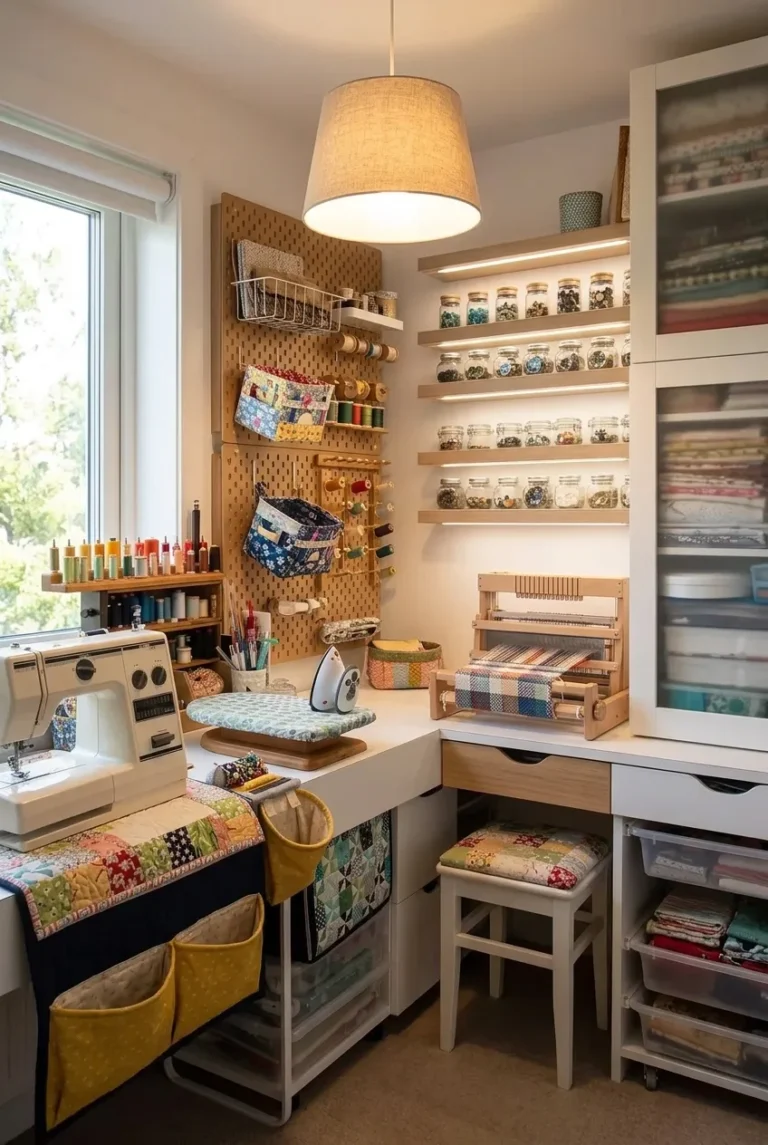
13 Craft Room Storage Solutions to Maximize Space and Boost Creativity
A well-organized craft room makes the difference between a space that inspires creativity and one that feels overwhelming before you even begin a project. With the right combination of storage systems, from pegboards to labeled bins, every supply can have a designated home that keeps the room functional and visually calm. These 13 craft room storage ideas cover everything from small-space solutions to full built-in systems, helping you design a space that supports your creative process rather than working against it.
1. Pegboard Wall Organization
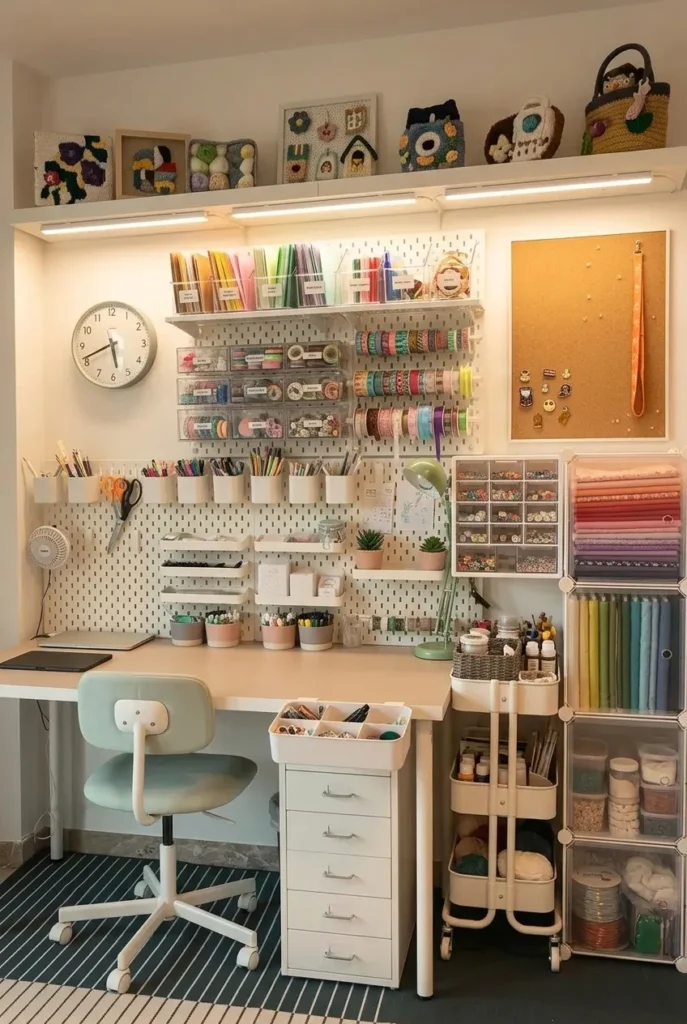
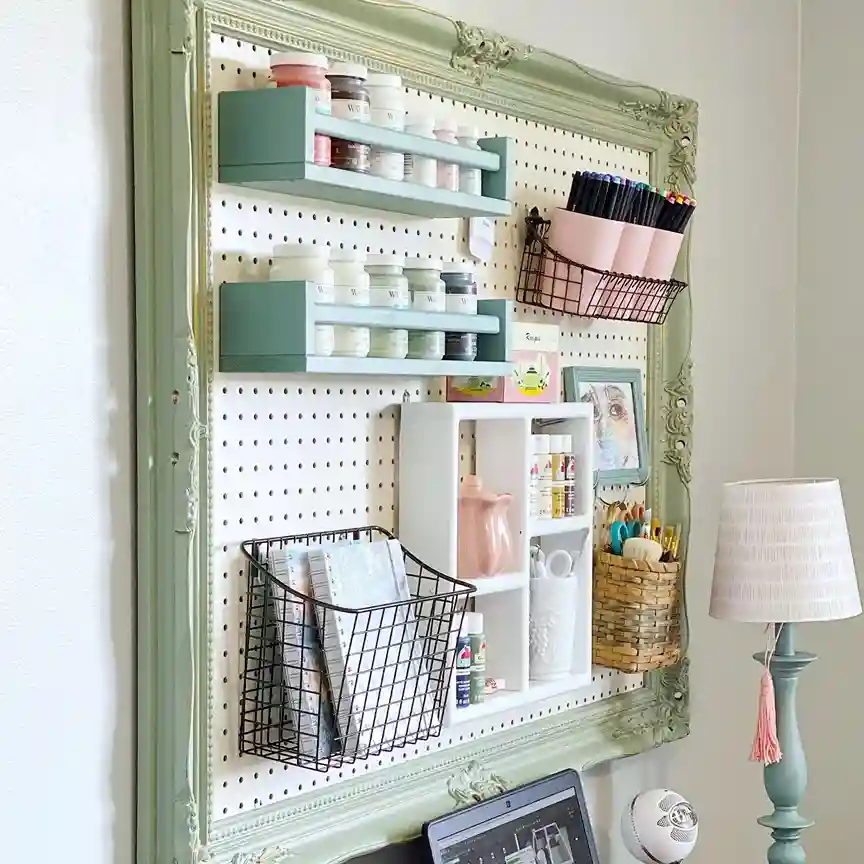
A pegboard mounted on the wall offers one of the most flexible storage solutions for a craft room, allowing tools, scissors, and small containers to be rearranged as your projects and supplies change over time. Hooks, small shelves, and baskets can all be attached directly to the pegboard, making it easy to customize the layout for your specific workflow. This system also keeps frequently used tools visible and within arm’s reach of the main work surface.
2. Clear Plastic Storage Bins
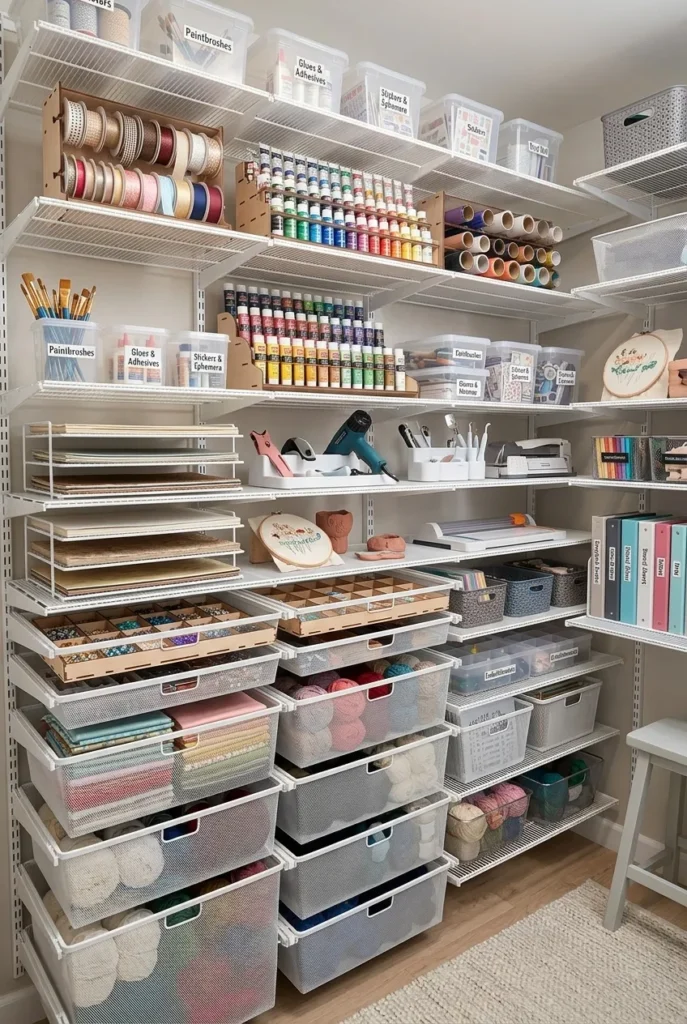
Clear plastic bins allow you to see the contents at a glance, eliminating the need to open multiple containers just to find one specific item. These bins work well for sorting supplies by category, project, or color, and they stack neatly on shelves or inside closets to maximize vertical space. Choosing uniform bin sizes also creates a clean, cohesive look throughout the storage area.
3. Rolling Storage Carts
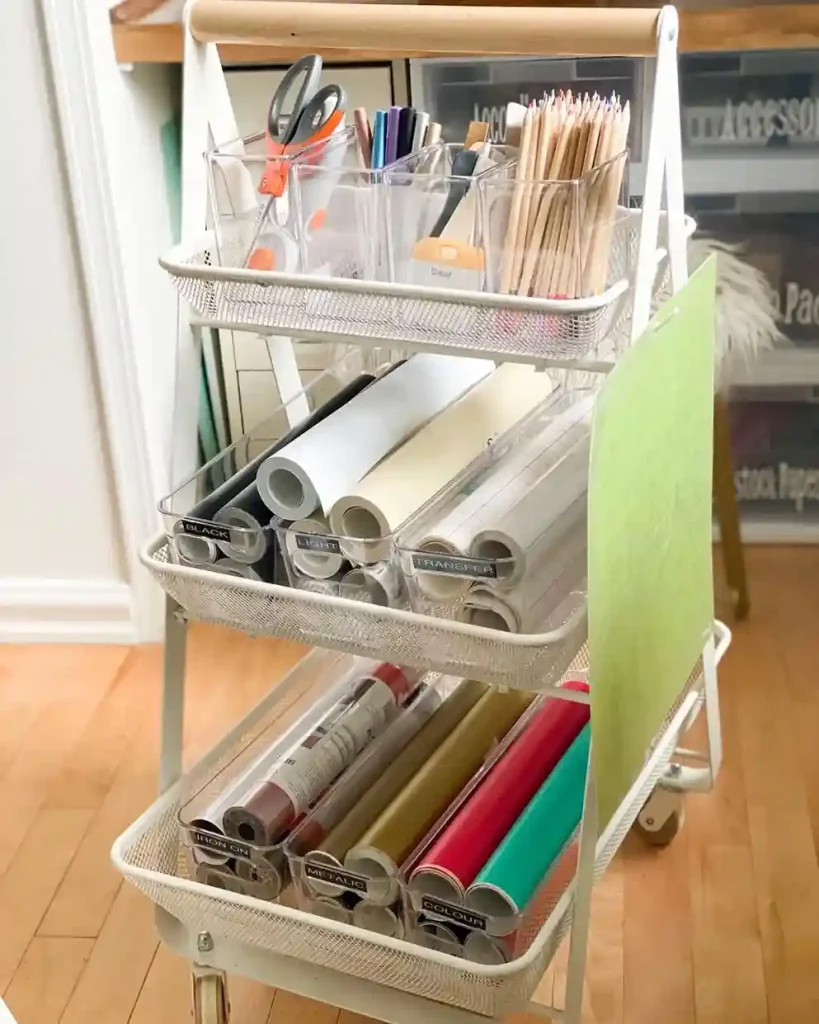
Rolling storage carts offer mobile, flexible organization that can be moved wherever a project requires, whether that’s next to a sewing machine or a work table. Multi-tiered carts with small drawers or baskets are especially useful for sorting supplies by type while keeping everything compact and portable. This solution works particularly well in smaller craft rooms or shared spaces where storage needs to remain flexible.
4. Mason Jar Storage Solutions
Mason jars provide an attractive and practical way to store small items like buttons, beads, ribbon spools, and paintbrushes, while also adding a decorative element to open shelving. Mounting jar lids underneath a shelf allows the jars to be twisted into place, saving valuable counter space in smaller rooms. This storage method is especially useful for supplies that benefit from being visually sorted by color or type.
5. Built-In Shelving Systems
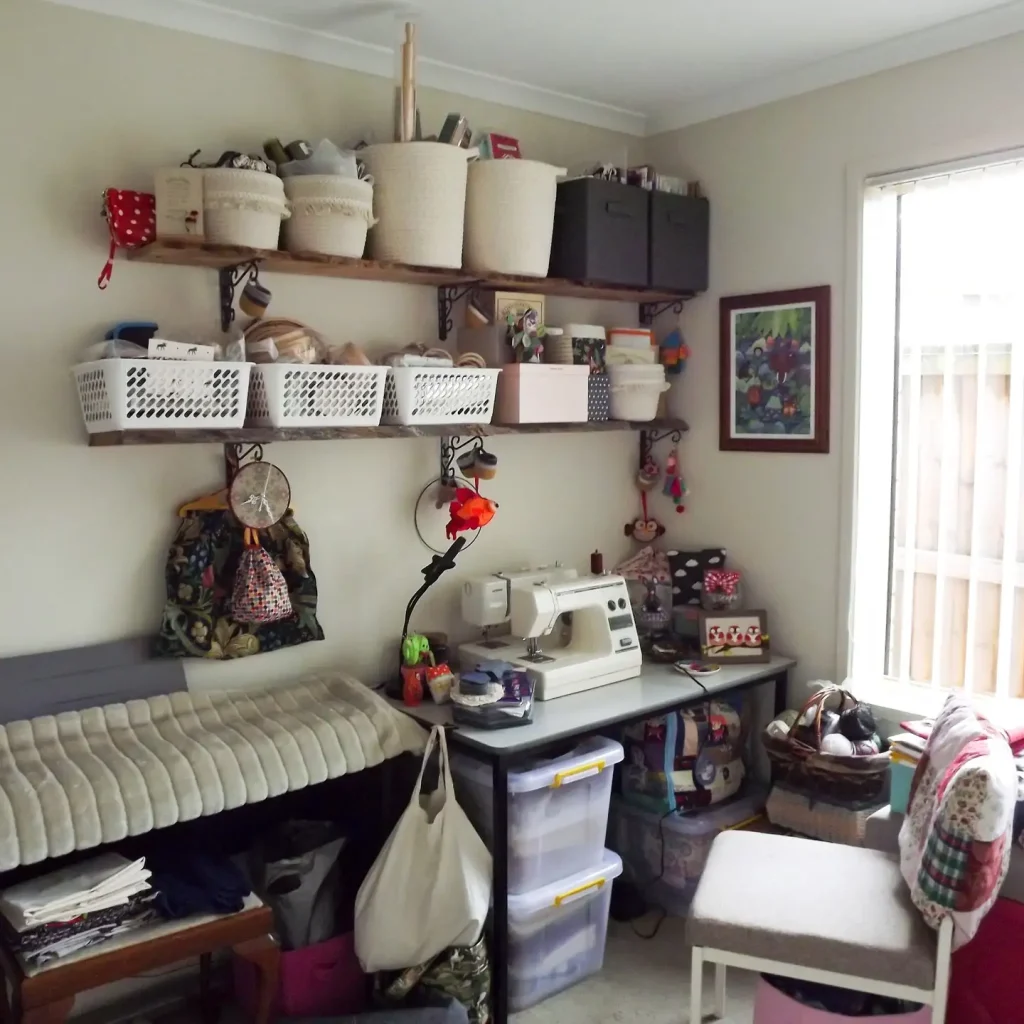
Built-in shelving offers a permanent, highly customizable storage solution designed specifically around the dimensions of your craft room and the supplies you need to store. These systems can be tailored to include a mix of open shelving, closed cabinets, and specialty compartments for larger equipment like cutting machines or sewing tables. While more of an investment than freestanding furniture, built-ins make the most efficient use of available wall space.
6. Ribbon Organization Systems
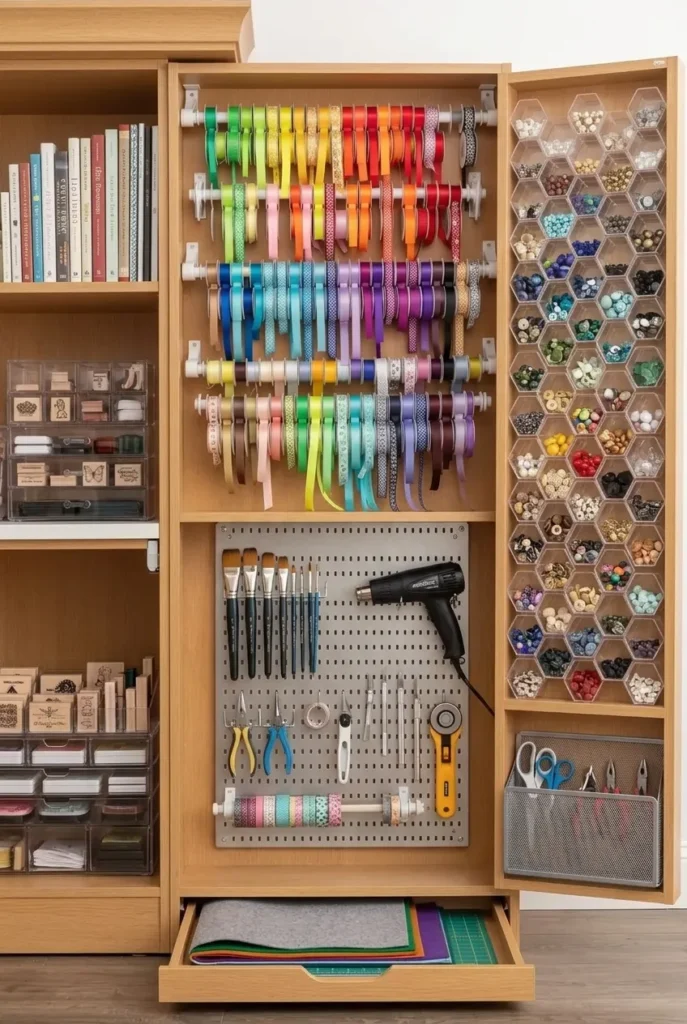
A dedicated ribbon organization system, whether a wall-mounted dowel rack or a drawer-based spool holder, keeps ribbon tangle-free and sorted by color or width for quick access. This type of system prevents the frustration of untangling ribbon from a messy drawer or bin every time a project requires it. Displaying ribbon on visible dowels also adds a colorful, decorative element to the craft room.
7. Repurposed Furniture Storage
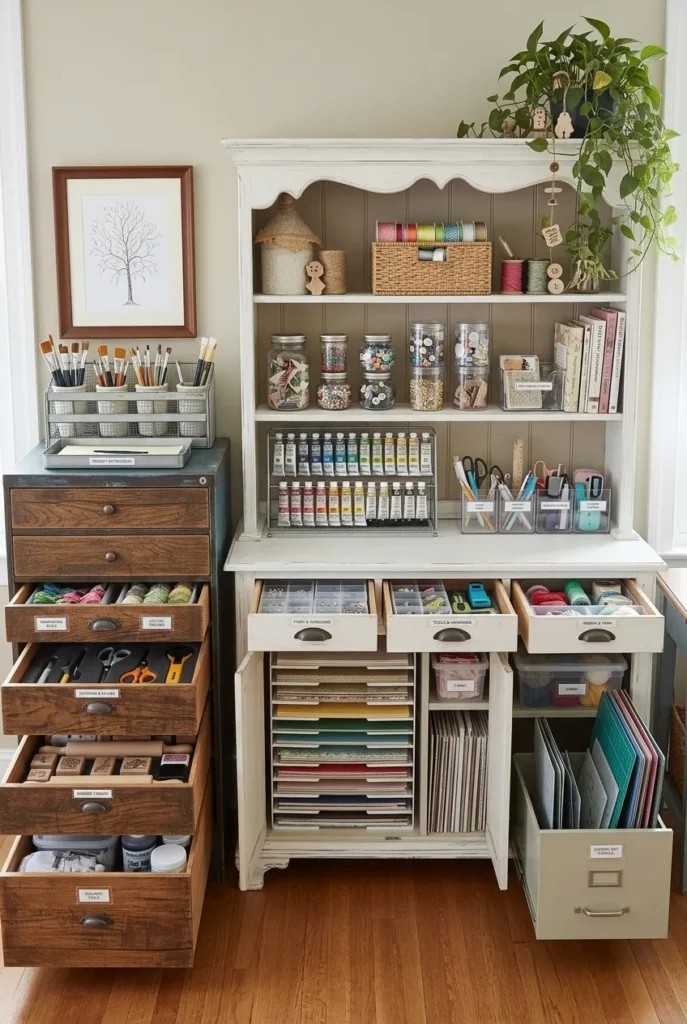
Repurposing furniture like old dressers, bookshelves, or bar carts offers an affordable and often more characterful alternative to purchasing specialty craft storage. A dresser’s drawers can be relabeled and reorganized to hold fabric, paper, or tools, while a repurposed bookshelf easily accommodates bins and baskets. This approach also allows for more personalized, unique storage solutions that reflect your own design style.
8. Vertical Wall Storage
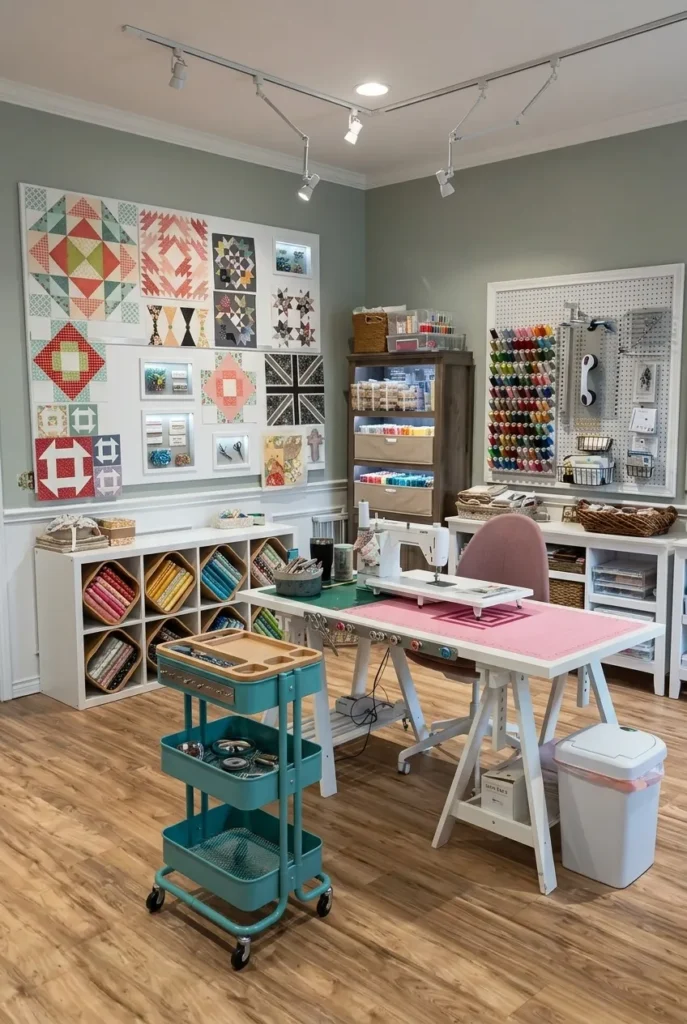
Utilizing vertical wall space through tall shelving units, hanging organizers, or wall-mounted racks helps maximize storage in craft rooms with limited floor space. This approach keeps supplies accessible while leaving the floor area open for work tables or additional furniture. Vertical storage is especially valuable in smaller rooms or closets converted into dedicated craft spaces.
9. Thread and Sewing Notions Organization
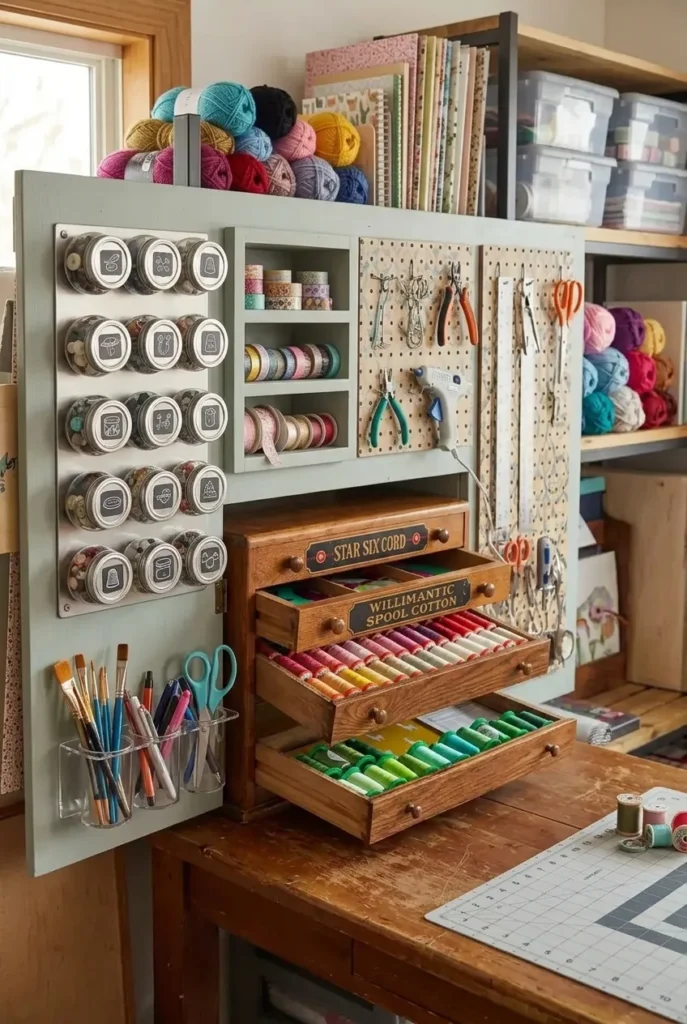
A dedicated thread organizer, whether a wall-mounted spool rack or a divided drawer insert, keeps sewing notions sorted and prevents thread from tangling or unraveling in a cluttered drawer. Clear thread racks also make it easy to select the right color at a glance without digging through a bin. Pairing thread storage with small containers for bobbins, needles, and pins keeps all sewing essentials organized in one dedicated area.
10. Label Maker Organization
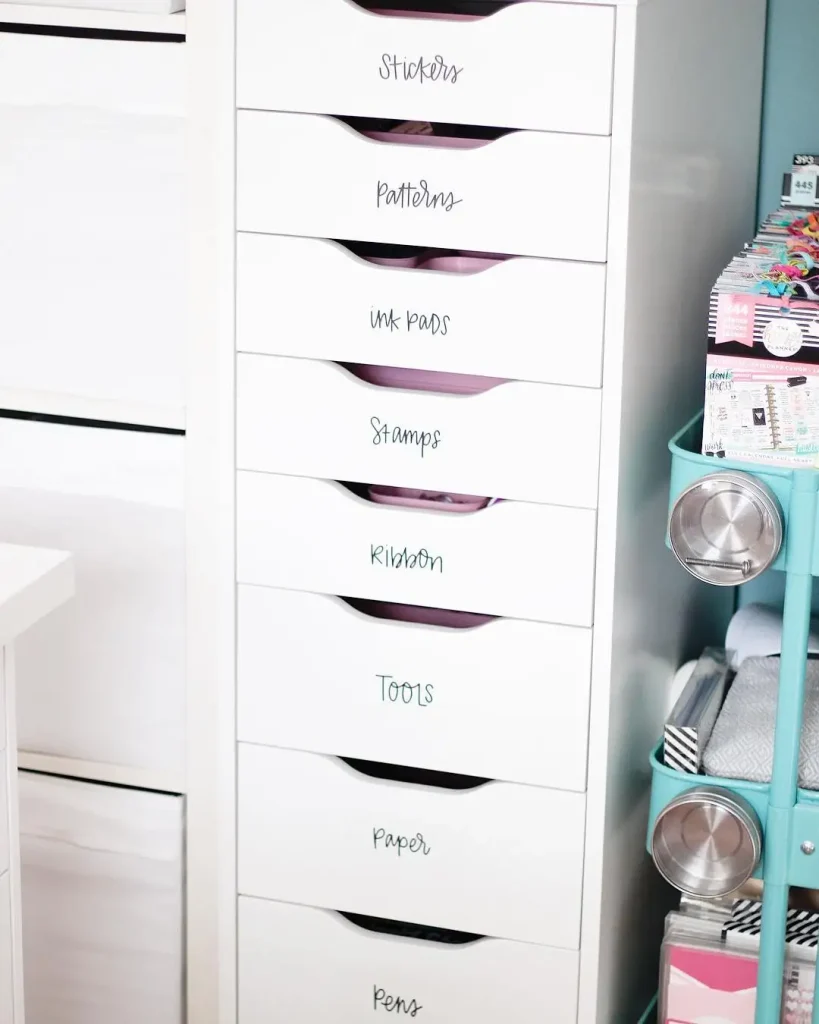
A label maker might seem like a small addition, but consistent, clear labeling across bins, drawers, and jars significantly improves the overall functionality of a craft room’s storage system. Labels help everyone in the household quickly identify where supplies belong, making cleanup faster and reducing the likelihood of items ending up in the wrong location. This simple tool is one of the most effective ways to maintain long-term organization once a storage system has been set up.
11. Over-Door Storage Solutions
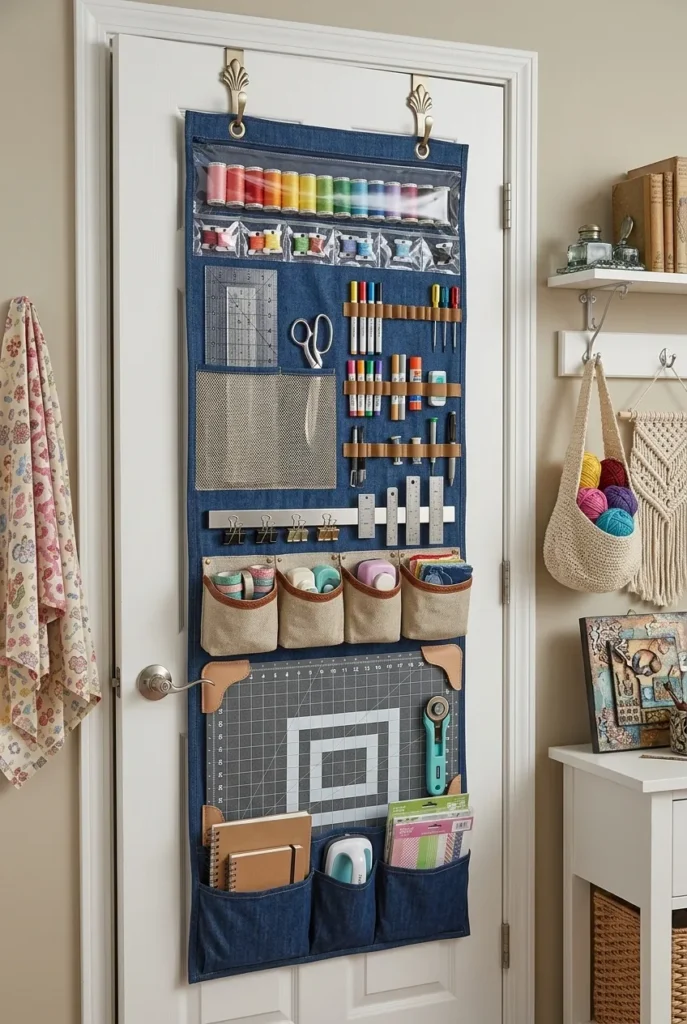
Over-the-door organizers make use of an often-overlooked storage opportunity, providing pockets or bins for smaller supplies like paint bottles, stickers, or embellishments without requiring any additional floor or wall space. These organizers are especially useful in smaller craft rooms or closets where every inch of storage counts. Because they’re easy to install without tools, over-door solutions also work well for renters or temporary craft spaces.
12. Drawer Divider Systems
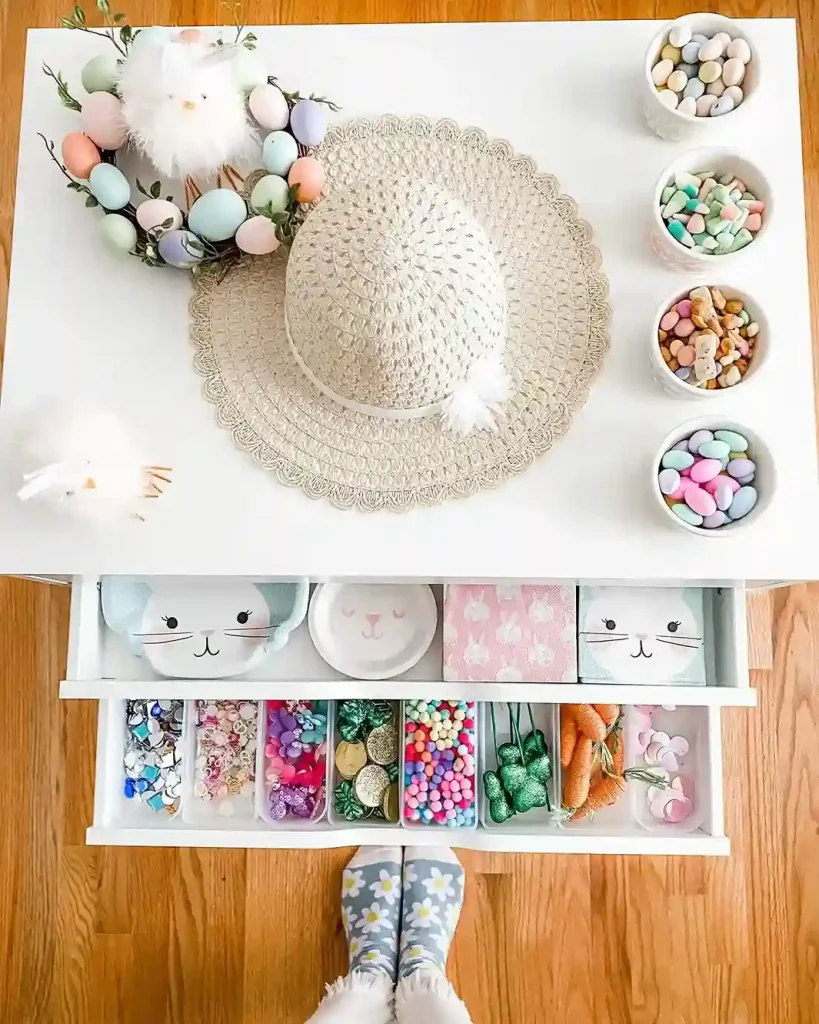
Drawer dividers transform a single junk drawer into an organized system with designated sections for scissors, tape, adhesives, and other small tools. Adjustable dividers allow the layout to be customized as supply needs change, making this a flexible solution for drawers of any size. This system prevents small items from shifting around and becoming disorganized every time the drawer is opened and closed.
13. Ceiling-Mounted Storage
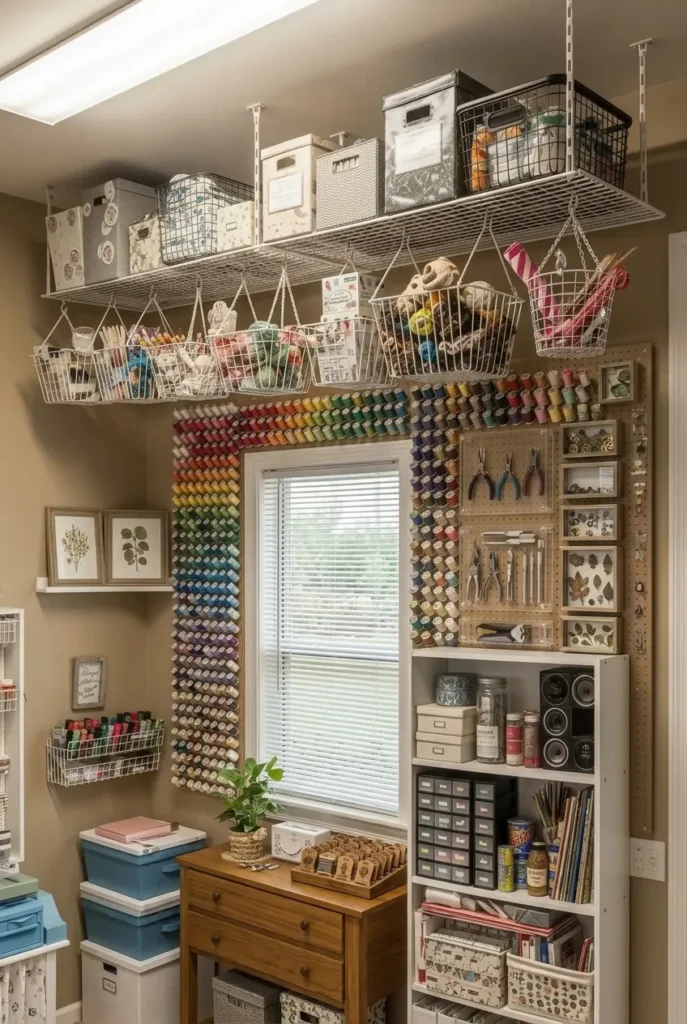
Ceiling-mounted storage racks or hanging baskets make use of vertical space above eye level, offering a practical solution for bulkier items like fabric bolts, large paper rolls, or seasonal craft supplies. This storage method keeps less frequently used items out of the way while still remaining accessible with a step stool when needed. Ceiling storage is particularly useful in craft rooms with limited closet or cabinet space.
Conclusion
An organized craft room isn’t just about having enough storage, it’s about creating a system that matches how you actually work, so supplies are easy to find and just as easy to put away. Whether you start with a simple pegboard wall or invest in a full built-in shelving system, each of these 13 storage ideas can be combined and customized to fit your space and creative process. With the right organization in place, your craft room can become a space that genuinely supports productivity and inspires you to start your next project.
Frequently Asked Questions
How do I organize craft supplies in a small space?
In a small craft space, prioritizing vertical storage through wall-mounted shelving, pegboards, and over-door organizers helps maximize the room without sacrificing floor space. Clear bins and labeled containers also make it easier to identify supplies quickly in a compact area. Choosing multi-functional furniture, like a rolling cart that doubles as extra work surface, further helps a small space stay efficient and organized.
What is the best way to store fabric for crafting?
Fabric is best stored folded and organized by type, color, or project on open shelving, in labeled bins, or in dedicated dresser drawers to keep it visible and easy to access. Rolling larger fabric pieces or bolts on cardboard tubes helps prevent creasing and makes vertical storage easier to manage. Keeping fabric away from direct sunlight and moisture also helps preserve its color and quality over time.
How can I organize craft supplies on a budget?
Budget-friendly craft room organization can start with repurposed furniture, like old dressers or bookshelves, combined with inexpensive clear bins and jars for smaller supplies. DIY solutions, such as a homemade pegboard or mason jar storage, also provide effective organization without a significant financial investment. Shopping secondhand or using items already on hand before purchasing new storage products is one of the most effective ways to keep costs low.
What should every craft room have?
Every functional craft room should have a dedicated work surface, adequate lighting, and a combination of both visible and closed storage to accommodate different types of supplies. A system for sorting and labeling items, whether through bins, drawers, or wall organizers, is also essential for maintaining long-term organization. Finally, having a few flexible storage solutions, like a rolling cart or adjustable shelving, helps the room adapt as your projects and supply needs change over time.