12 Hobby Room Ideas to Create a Stylish and Inspiring Creative Space
A dedicated hobby room gives your interests a place of their own, making it easier to create, practice, build, or relax without taking over other areas of your home. Instead of searching through cabinets for supplies or moving unfinished projects from one surface to another, you can keep everything organized in a space designed around the activities you enjoy.
Credits: @_mullwoods
The right hobby room can be created in a spare bedroom, basement, attic, home office, or even a generously sized corner. Focus on practical storage, comfortable furniture, suitable lighting, and enough workspace for your chosen activity. These 12 hobby room design ideas offer inspiration for creating a personal space that feels useful, inviting, and ready for your next project.
1. The Artist’s Studio Sanctuary
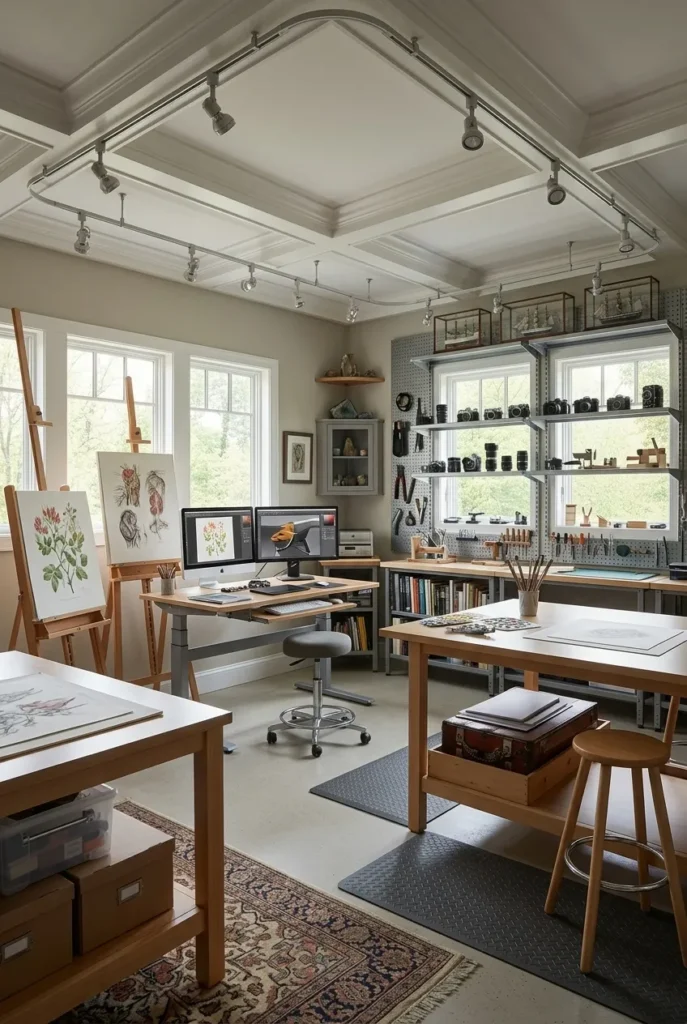
Turn a spare room into a bright creative studio where painting, drawing, and mixed-media projects have plenty of room to grow. Position your main work area close to a window when possible, allowing natural daylight to illuminate your canvas while keeping the surroundings simple and distraction-free.
- Place an easel or drawing desk near a source of natural light.
- Organize brushes, paints, pencils, and sketchbooks in separate containers.
- Add adjustable lamps for detailed work during evenings or cloudy days.
- Choose easy-to-clean flooring and work surfaces for messier projects.
Open shelving can keep colorful supplies visible while drawers provide a tidy home for smaller tools. A rolling cart is another practical addition because paints, brushes, and other essentials can move around the room with you. If you regularly use materials with strong odors, include suitable ventilation in the room plan.
2. Crafting Paradise with Smart Storage
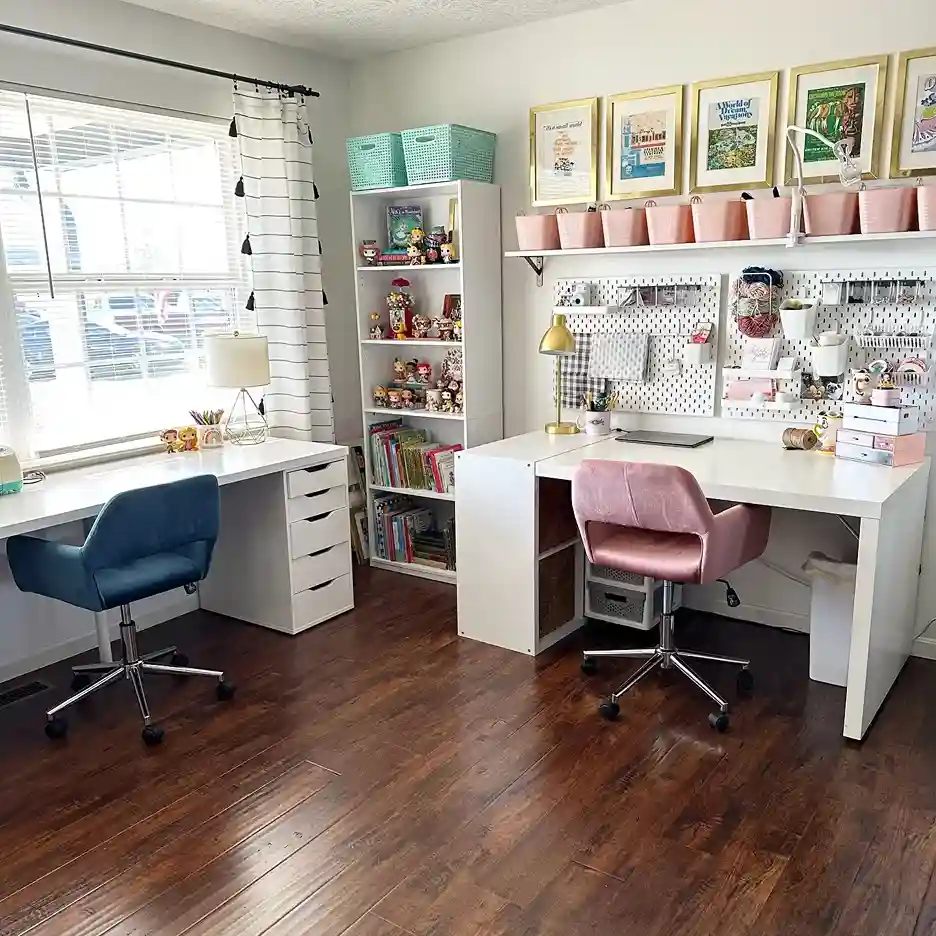
Create a craft room where supplies are easy to find and there is always a clear surface available for your next idea. A large central table can become the heart of the space, while wall storage keeps paper, ribbons, scissors, beads, and other materials from crowding the work area.
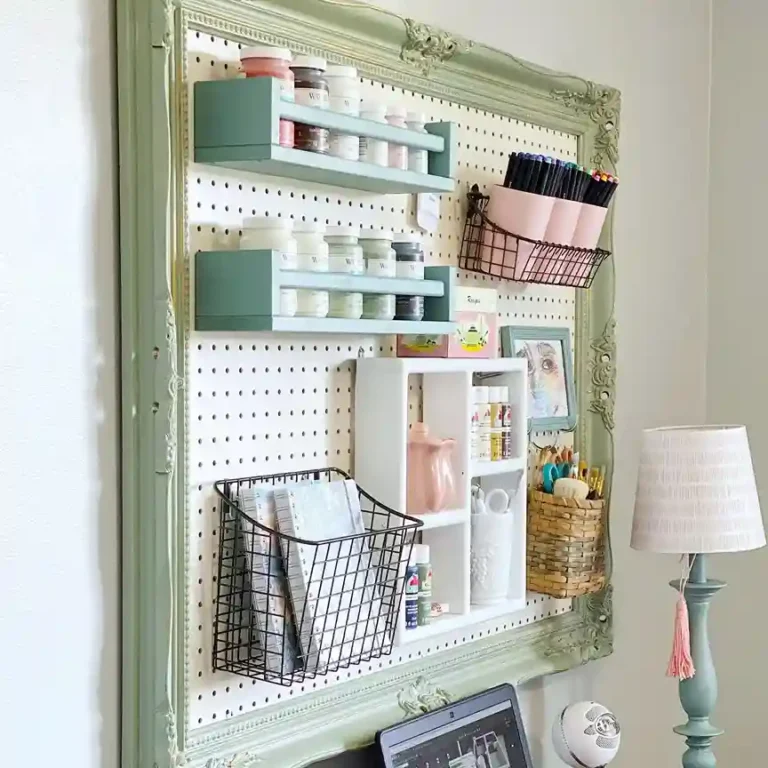
- Install a pegboard for scissors, rulers, tapes, and frequently used tools.
- Keep smaller supplies inside labeled drawers or transparent containers.
- Add wall shelves for paper, fabric, yarn, and decorative materials.
- Choose a supportive chair for longer crafting sessions.
Making use of vertical space is particularly helpful in smaller craft rooms. Tall shelving, hanging organizers, and stackable containers can hold a surprising amount without sacrificing valuable floor area. Keep everyday supplies closest to the table and reserve higher shelves for materials you only use occasionally.
3. Home Music Studio
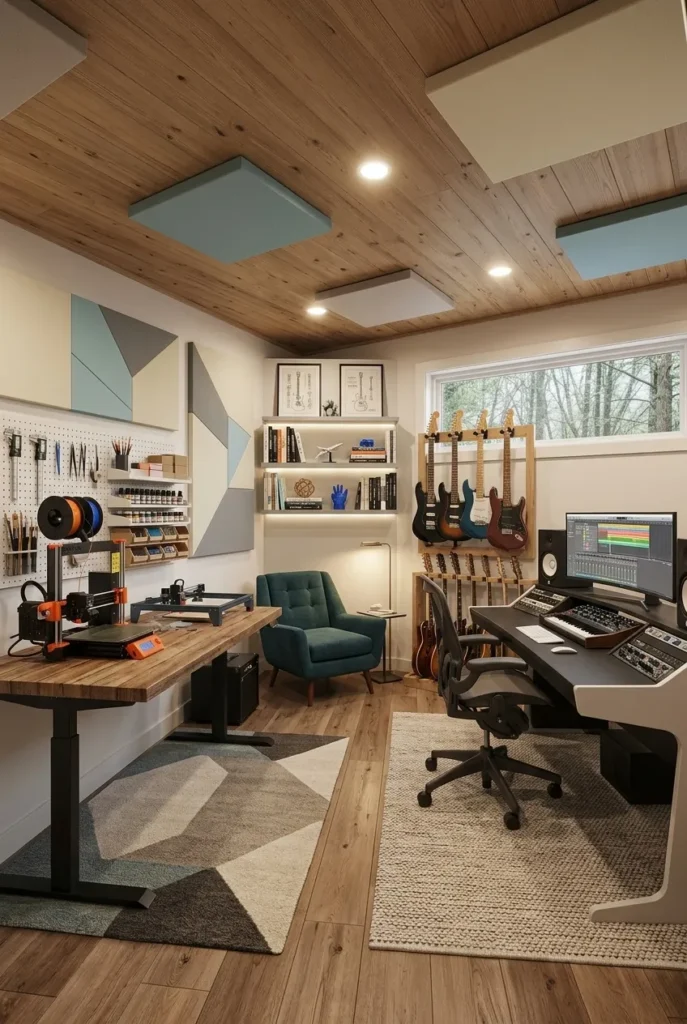
Design a home music studio that supports everything from casual practice to songwriting and recording. Start with a comfortable layout for your instruments, then consider how sound behaves within the room. Acoustic treatments can reduce unwanted reflections, while thoughtful storage keeps instruments and equipment protected between sessions.
- Use instrument stands or wall racks to keep equipment organized.
- Add acoustic panels where they can help control echoes and reflections.
- Create a dedicated desk for recording equipment, speakers, and monitors.
- Include adjustable lighting for practicing, composing, and recording.
Wood finishes, rugs, curtains, and upholstered seating can make the room feel warmer and more inviting. Keep cables neatly managed around recording equipment and leave enough open space to move between instruments comfortably. A practical layout makes it easier to begin playing whenever inspiration arrives.
4. Sewing and Quilting Workshop
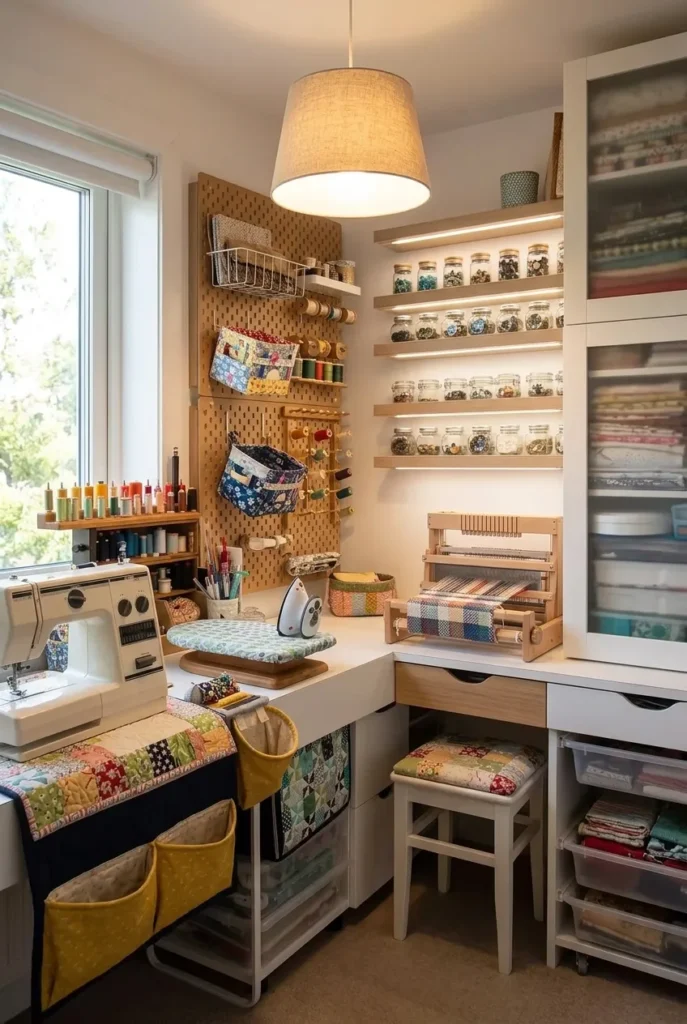
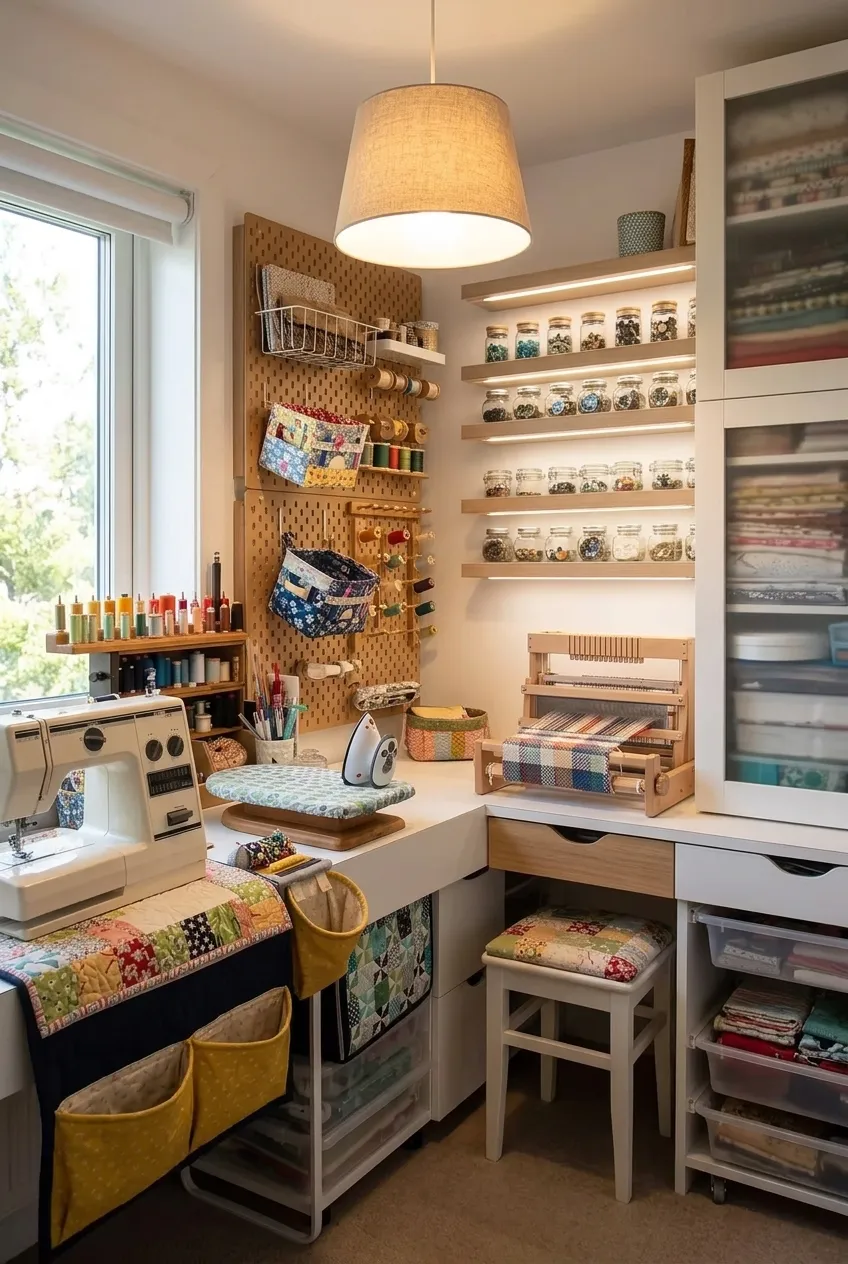
A well-planned sewing room can make cutting, stitching, pressing, and assembling projects much more convenient. Build the layout around a generous cutting surface and position sewing machines where they receive plenty of light. Shelving can turn colorful fabric collections into part of the room’s visual appeal.
- Use a large cutting table at a comfortable standing height.
- Arrange thread by color so the right shade is easy to locate.
- Store folded fabric on shelves, cubbies, or labeled bins.
- Provide focused lighting around sewing machines and ironing areas.
Try arranging the room according to your usual workflow. Fabric can move from storage to the cutting table, then to the sewing station and finally to the ironing area without unnecessary trips across the room. Small drawers near the sewing machine can hold needles, bobbins, pins, measuring tools, and other everyday essentials.
5. Gaming Command Center
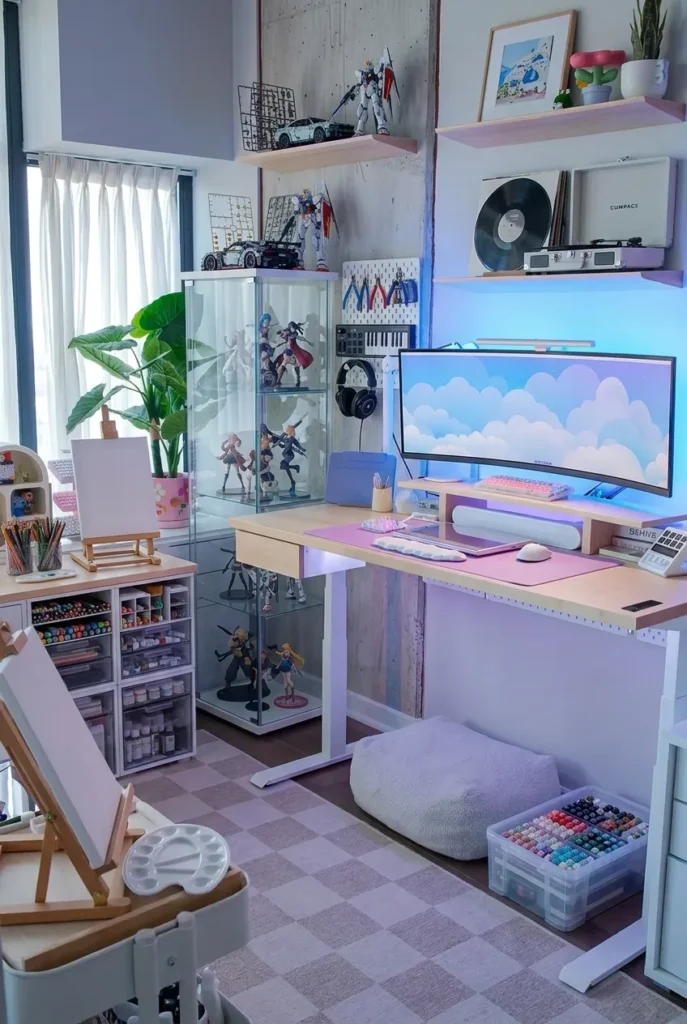
Build a gaming room that combines an impressive setup with the comfort needed for longer sessions. Start with a spacious desk, supportive seating, and screens positioned at comfortable viewing heights. Then bring personality into the room through lighting, collectibles, wall displays, and accessories inspired by your favorite games.
- Choose an ergonomic chair with suitable back and arm support.
- Use cable trays or clips to keep wires organized around the desk.
- Add shelves for consoles, controllers, games, and collectibles.
- Install ambient lighting around the desk, monitor, or ceiling.
A clutter-free desk can make the entire gaming setup feel more polished. Keep frequently used accessories nearby while storing spare cables and less-used equipment in drawers or cabinets. Curtains and acoustic elements can also help create a more immersive atmosphere by reducing distractions from the rest of the home.
6. Woodworking Workshop
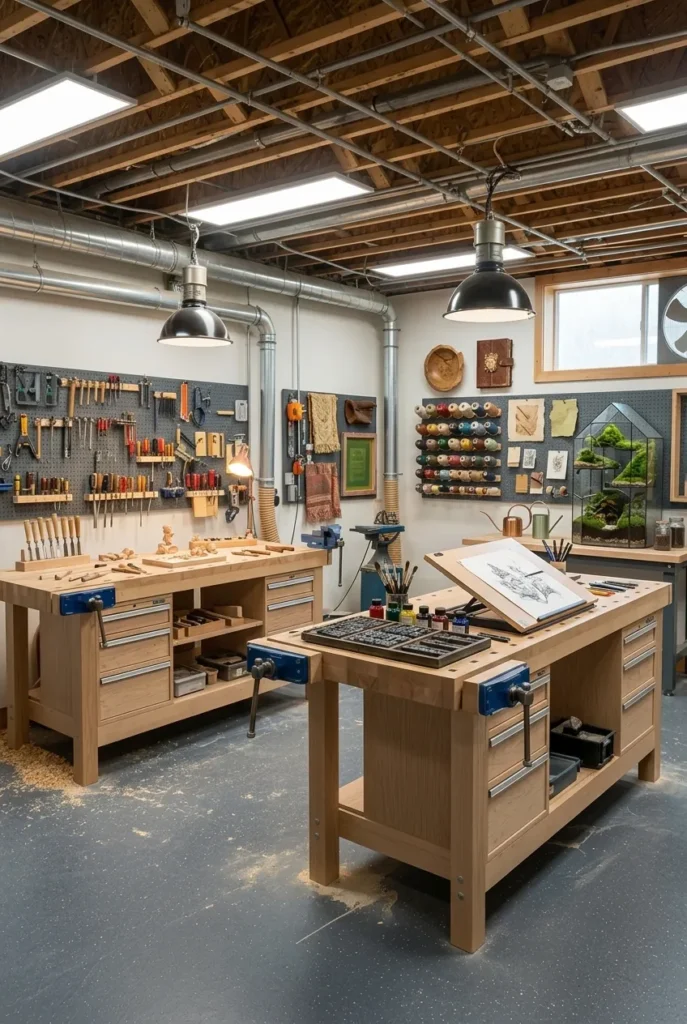
Create a practical woodworking room centered around sturdy surfaces, accessible tools, and plenty of room to work safely. A durable workbench can serve as the main station for measuring, assembling, sanding, and finishing projects, while wall-mounted storage keeps tools visible and within reach.
- Choose heavy-duty workbenches suitable for your typical projects.
- Use pegboards, racks, or cabinets to organize hand tools.
- Install strong overhead lighting along with focused task lights.
- Plan appropriate ventilation and dust collection for the workspace.
Durable flooring is useful in a workshop where heavy equipment, sawdust, and frequent movement are part of everyday use. Keep clear pathways around major work areas and group tools according to how you use them. An organized setup can save time while giving larger projects the room they need.
7. Home Library and Reading Room
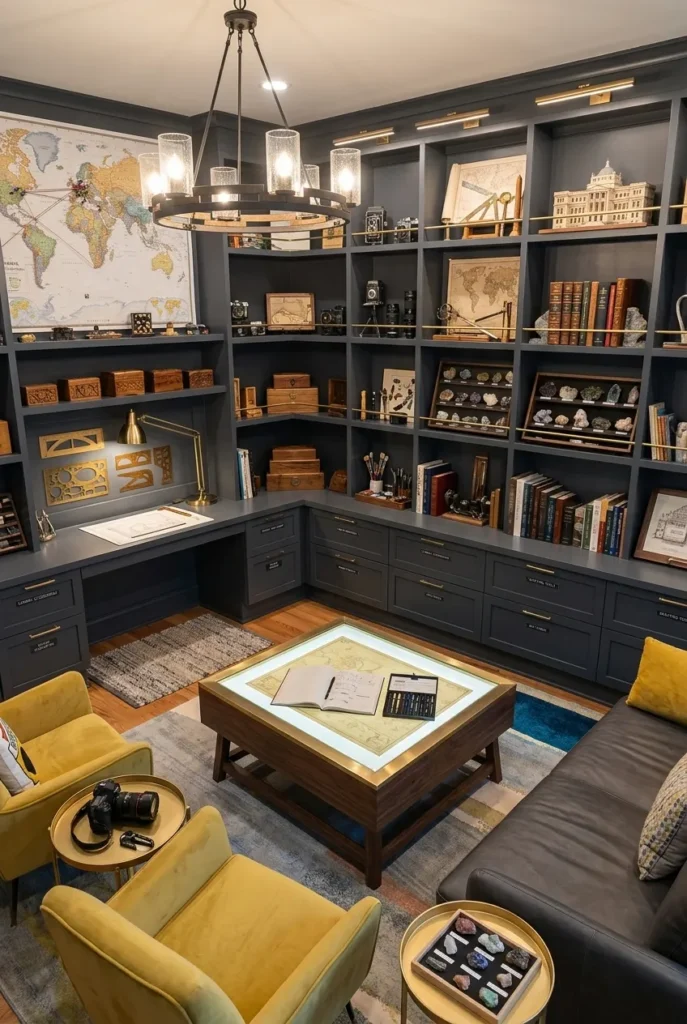
Turn an underused room into a cozy library where books become the main feature. Floor-to-ceiling shelving can accommodate a growing collection while a comfortable chair, warm lighting, and a small side table create an inviting corner for uninterrupted reading.
- Install tall bookshelves to take advantage of vertical wall space.
- Create a reading nook with a comfortable chair or small sofa.
- Add a floor lamp or reading light beside your favorite seat.
- Use rugs, cushions, and throws to introduce softness and warmth.
Books can be arranged by genre, author, subject, or any system that makes browsing enjoyable for you. If space permits, add a compact desk for journaling, studying, or taking notes. Artwork and meaningful objects displayed between books can give the library an even more personal character.
8. Yoga and Meditation Studio
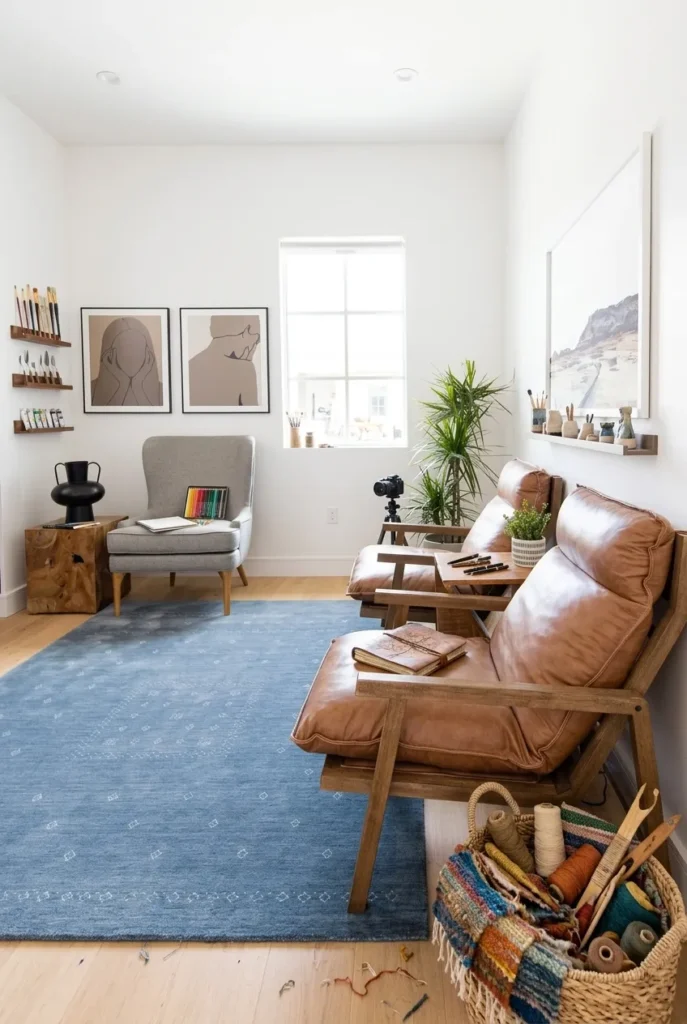
Design a quiet wellness room with enough open floor space for yoga, stretching, breathing exercises, and meditation. Keep furnishings simple so the room feels spacious rather than crowded, and use soft lighting to create a comfortable atmosphere during both morning and evening practices.
- Leave an uncluttered floor area for movement and yoga poses.
- Store mats, blocks, straps, and cushions inside baskets or cabinets.
- Use dimmable lighting to adjust brightness for different activities.
- Add natural textures through wood, woven materials, or indoor plants.
Decorate with restraint so the room remains visually peaceful. A small speaker can be useful for meditation sessions or gentle background music, while curtains can soften bright daylight when needed. Keeping equipment neatly stored also makes the room feel welcoming whenever you enter.
9. Model Building and Miniature Workshop
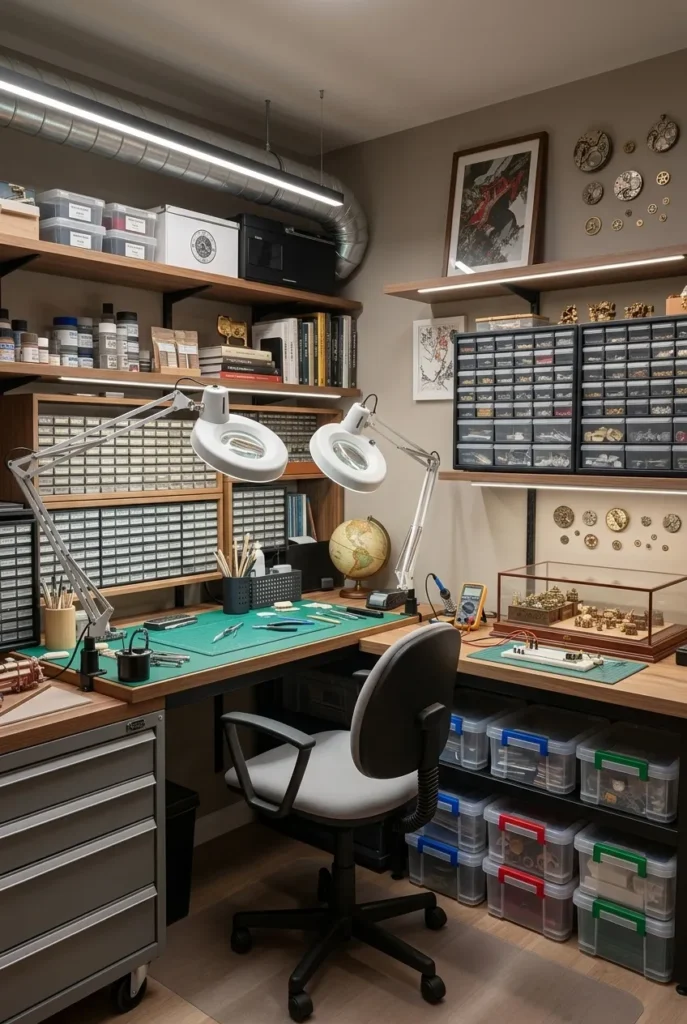
Model building requires concentration, precision, and plenty of organized storage for tiny components. Create a dedicated workstation where projects can remain undisturbed between sessions, and provide bright lighting that makes painting, assembling, and detailing miniature pieces easier.
- Use compartment organizers for small parts, tools, and accessories.
- Add a magnifying lamp for painting and precision assembly.
- Install enclosed cabinets for displaying completed models.
- Keep brushes, paints, adhesives, and cutting tools near the worktable.
Shallow drawers are especially useful because small pieces remain visible instead of becoming buried inside deep containers. Leave part of the desk clear for current projects and consider using trays for pieces that belong to the same model. Proper ventilation is also important when working with paints, adhesives, or similar materials.
10. Board Game and Puzzle Haven
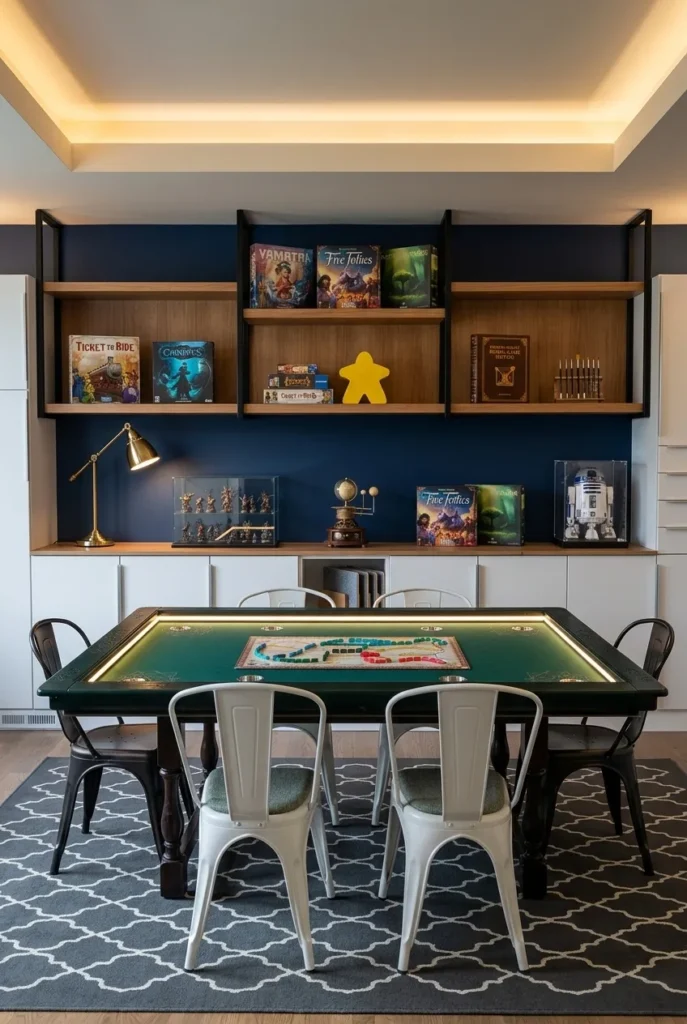
Create a welcoming game room where friends and family can settle in for board games, card games, and challenging puzzles. A generous central table should provide enough space for larger game boards while comfortable seating makes longer sessions enjoyable.
- Select a table large enough for puzzles and multiplayer board games.
- Organize games on shelves according to size, category, or frequency of use.
- Choose comfortable chairs that work well for extended game nights.
- Add bright overhead lighting so cards and game pieces remain easy to see.
A nearby side table can hold snacks and drinks without crowding the playing surface. Add personality through framed game artwork, vintage boards, collectibles, or colorful shelving. Cozy touches such as cushions and throws can make the room equally appealing for casual family evenings and competitive game nights.
11. Home Theater and Movie Room
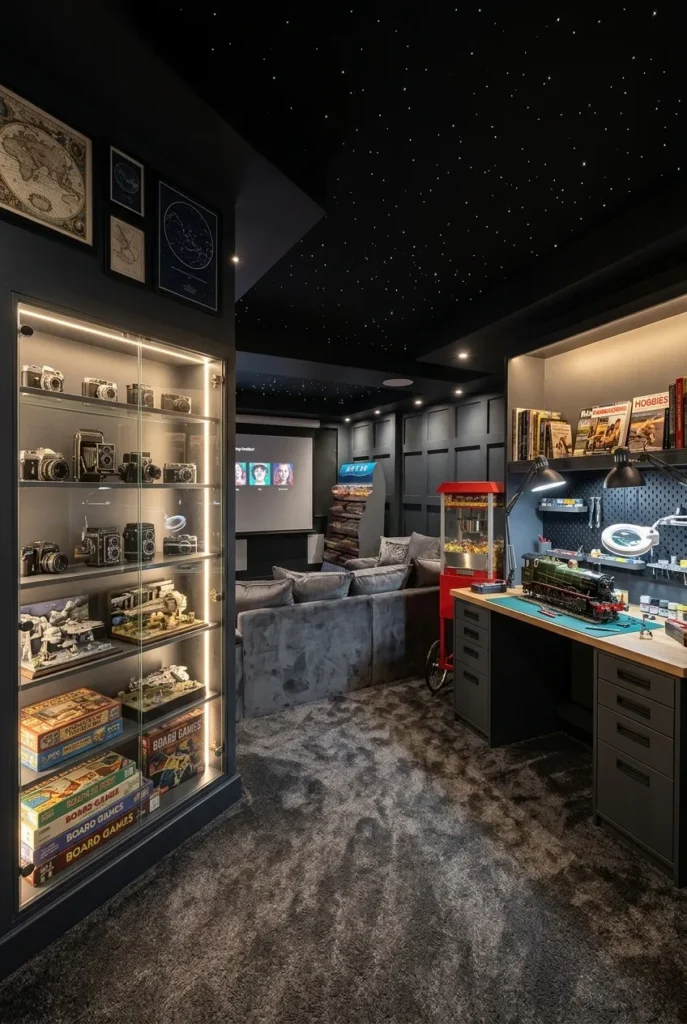
Bring the cinema experience home with a movie room designed around comfortable viewing, controlled lighting, and immersive sound. Arrange seating so everyone has a clear view of the screen and use window coverings to limit unwanted daylight during daytime movies.
- Install blackout curtains or shades for better light control.
- Position seating at a comfortable distance and angle from the screen.
- Use acoustic treatments to improve sound within the room.
- Add low-level ambient lighting for a cinema-inspired atmosphere.
Recliners, a deep sofa, or tiered seating can make the room comfortable for everything from quick episodes to movie marathons. Include side tables or cup holders for drinks and snacks, and keep media equipment neatly stored so the room maintains a clean, relaxing appearance.
12. Vintage Craft and Restoration Workshop
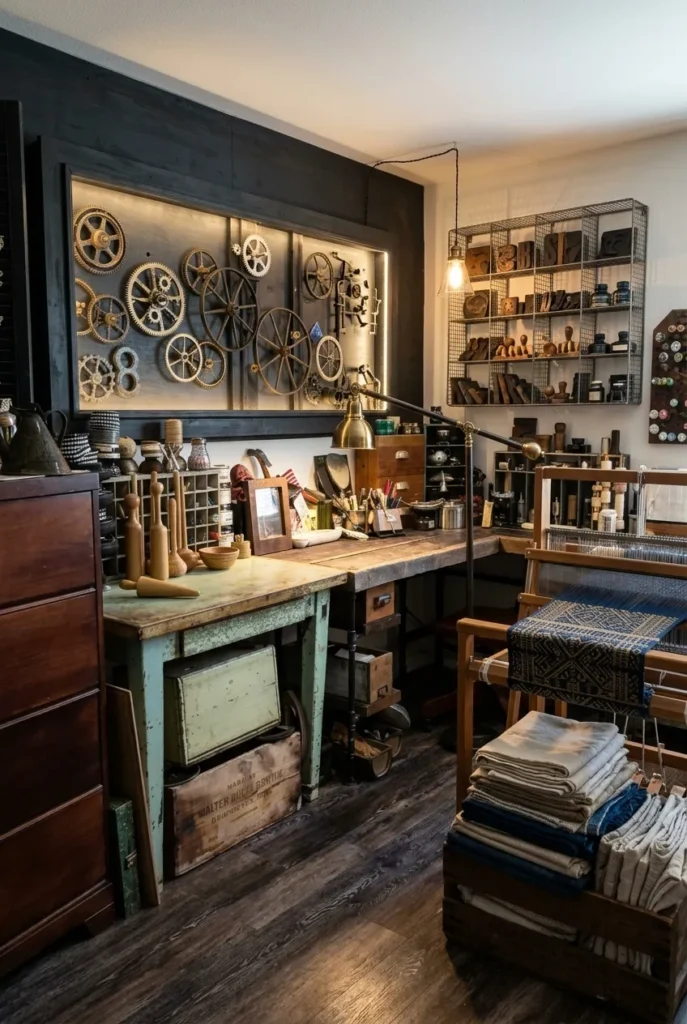
Create a character-filled workshop for repairing furniture, restoring decorative pieces, and working on vintage finds. The space should combine durable work surfaces with organized storage while providing enough light to examine details, finishes, hardware, and delicate materials closely.
- Use sturdy tables with protective surfaces for restoration projects.
- Separate brushes, hardware, hand tools, and finishing supplies into storage zones.
- Add bright task lighting above areas used for detailed repairs.
- Provide shelving for finished pieces and projects currently in progress.
Reclaimed shelving, vintage cabinets, old drawers, and wooden storage boxes can complement the purpose of the room while providing useful organization. Mixing traditional workshop character with practical modern storage creates a hobby space that feels appropriate for restoring pieces with history.
Conclusion
A hobby room should make spending time on your favorite activities easier and more enjoyable. Whether you prefer painting, sewing, reading, gaming, woodworking, meditation, or restoring vintage pieces, designing the room around your actual habits will help you create a space that feels practical rather than simply decorative.
Begin with the essentials your hobby requires, including workspace, storage, lighting, and comfortable furniture. Once those elements are in place, introduce colors, artwork, collections, and personal details that reflect your interests. With thoughtful planning, an overlooked room or unused corner can become one of the most enjoyable and creative spaces in your home.
Frequently Asked Questions
What size room do I need for a hobby space?
The amount of space you need depends largely on the hobby and the equipment involved. Activities such as reading, crafting, or model building can work well in compact rooms, while woodworking or music setups may require more floor area. Even a small spare room can become useful when vertical storage, wall organizers, and appropriately sized furniture are used effectively.
How can I soundproof my hobby room?
Start by reducing sound transfer through doors, windows, walls, and floors. Rugs, heavy curtains, upholstered furniture, acoustic panels, and door seals can help limit noise and control echoes. If the room will be used for instruments, recording, or other louder activities, additional acoustic treatment or professional soundproofing may be worth considering.
What lighting is best for a hobby room?
A layered lighting setup works well for most hobby spaces. Natural daylight can provide comfortable general illumination, while ceiling fixtures brighten the entire room and task lamps provide focused light for detailed activities. Adjustable or dimmable fixtures are useful when the room serves different purposes throughout the day.
How do I organize a hobby room on a budget?
Begin with storage items you already have, such as jars, baskets, boxes, shelves, and small cabinets. Repurposed furniture can provide affordable storage, while pegboards and wall hooks make use of empty vertical space. Organize frequently used supplies within easy reach and gradually add new storage only when you know exactly what the room needs.