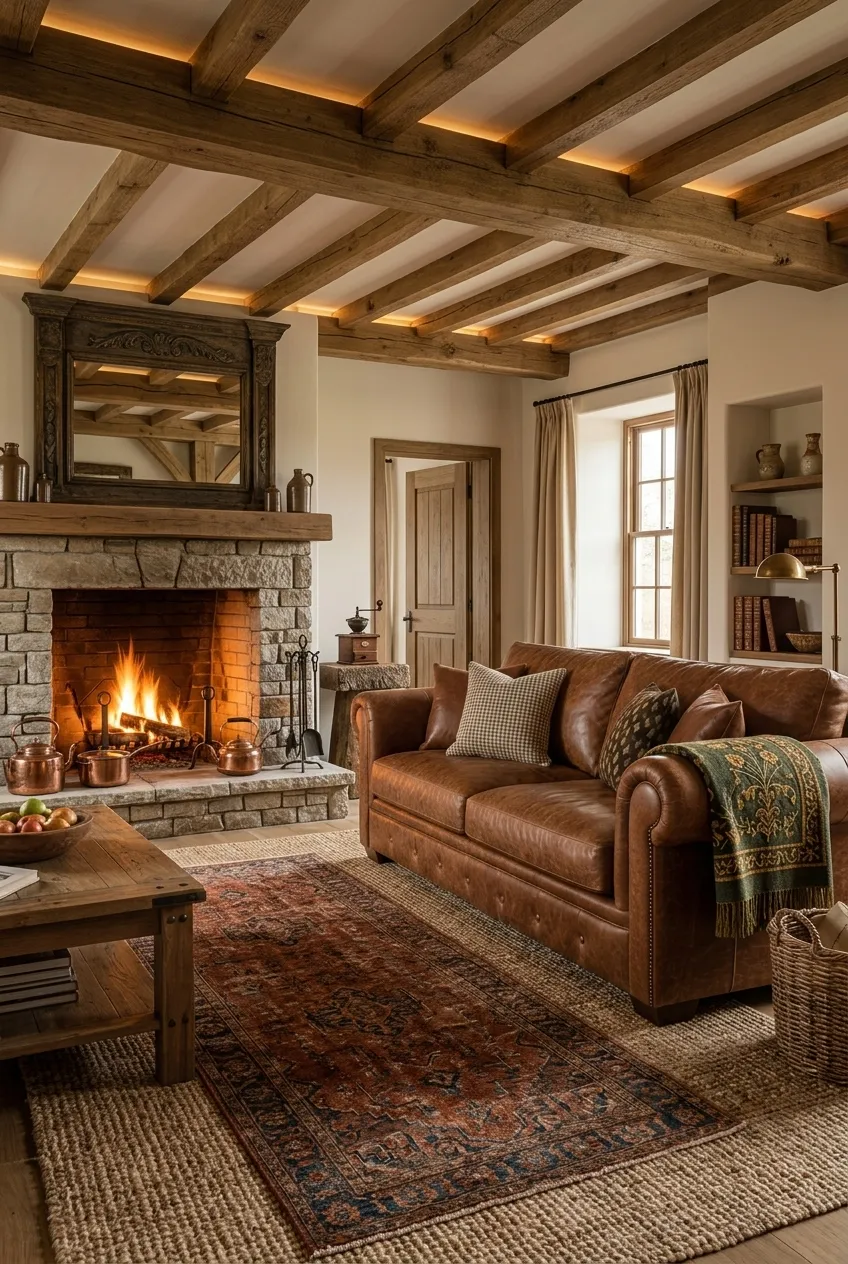
18 Warm Rustic Living Room Ideas for a Cozy and Inviting Home
A rustic living room is one of the most inviting spaces you can design, blending natural materials, warm textures, and a relaxed atmosphere into a room that feels like a true retreat. Whether you’re working with a cabin, farmhouse, or simply want to bring a touch of cozy, organic charm into a modern home, rustic design offers endless opportunities for warmth and character. These 18 ideas will guide you through building a living room that feels comforting, welcoming, and effortlessly stylish.
1. The Stone Fireplace Wall
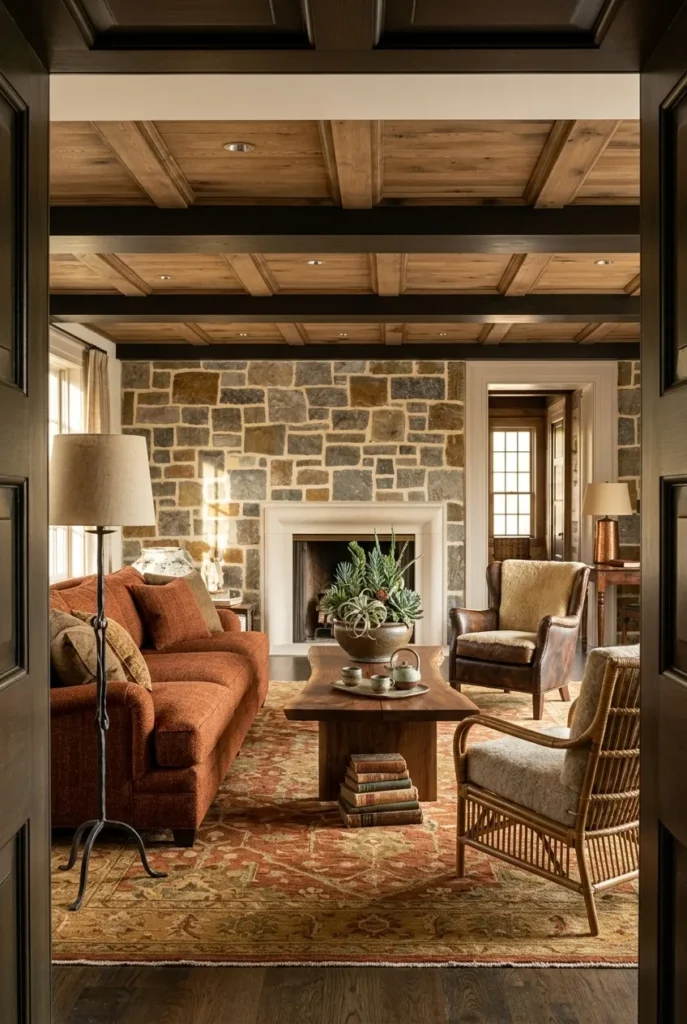
- Natural stone adds texture and a strong architectural focal point.
- A wood mantel softens the stone and adds display space.
- Works well with both wood-burning and gas fireplace inserts.
- Pairs beautifully with leather seating and layered textiles.
- Creates a natural gathering spot for the whole room.
A stone fireplace wall is often the heart of a rustic living room, anchoring the space with natural texture and a sense of permanence. Whether built from rough-hewn fieldstone or smoother river rock, this feature instantly draws the eye and creates a natural gathering point for the room. Pairing the stone with a wood mantel adds an extra layer of warmth and ties the fireplace into the rest of the rustic decors.
2. Reclaimed Wood Accent Wall
- Reclaimed wood adds authentic texture and natural variation.
- Works well as a backdrop for a TV, sofa, or fireplace.
- Eco-friendly choice when sourced from salvaged materials.
- Pairs beautifully with black metal or leather accents.
- Requires little additional decor to make a strong visual impact.
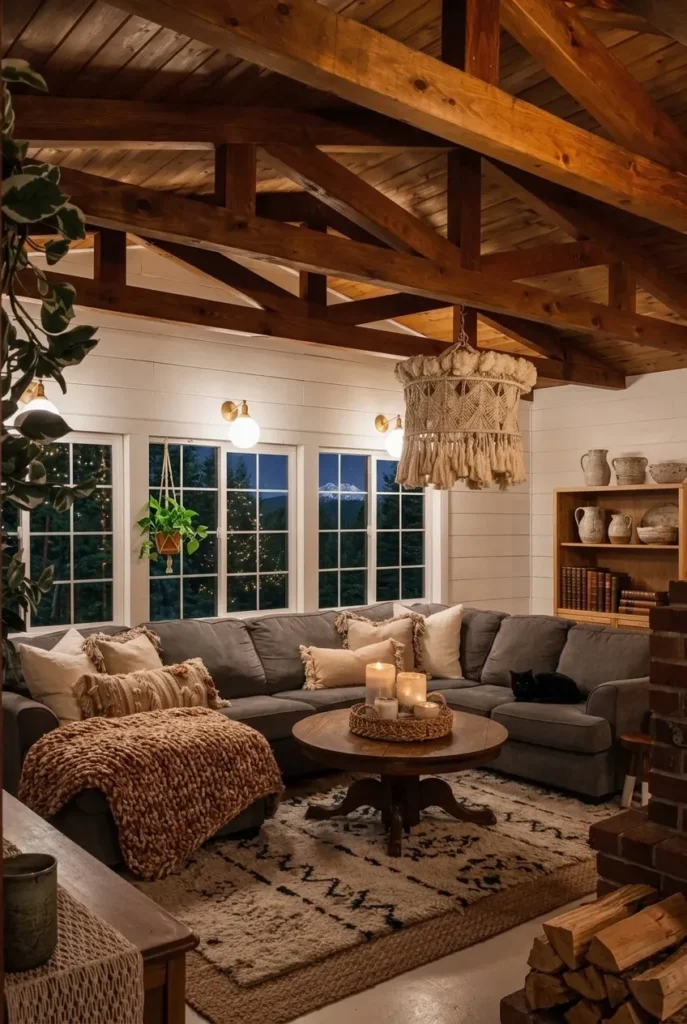
A reclaimed wood accent wall brings history and character into a rustic living room, with each plank carrying its own texture, grain, and weathered patina. This feature works well as a backdrop behind a sofa, television, or fireplace, adding depth without requiring extensive furniture or decor changes. The imperfections in reclaimed wood, from nail holes to color variation, are part of what gives the wall its authentic, lived-in charm.
3. A Leather Anchor Sofa
- Leather develops a rich patina that enhances the rustic aesthetic.
- Durable material stands up well to daily family living.
- Pairs naturally with wood, stone, and woven textures.
- Distressed or vintage leather adds extra warmth and character.
- Works as a neutral base for layering colorful pillows and throws.
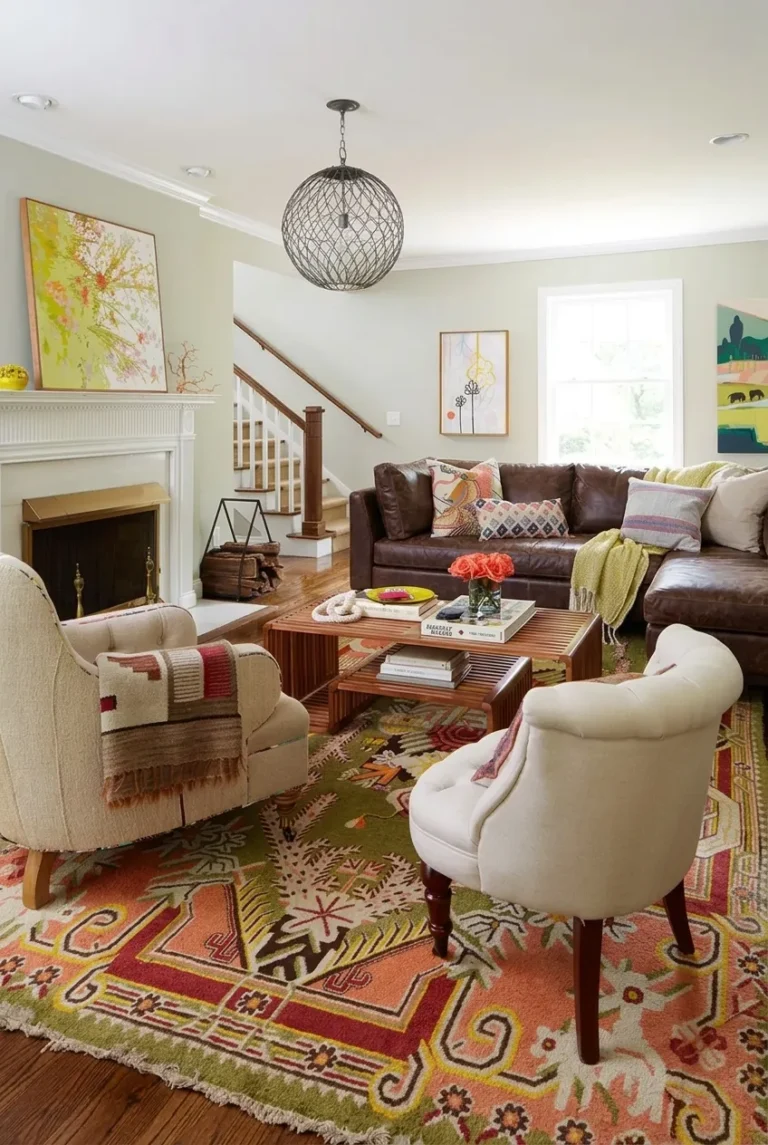
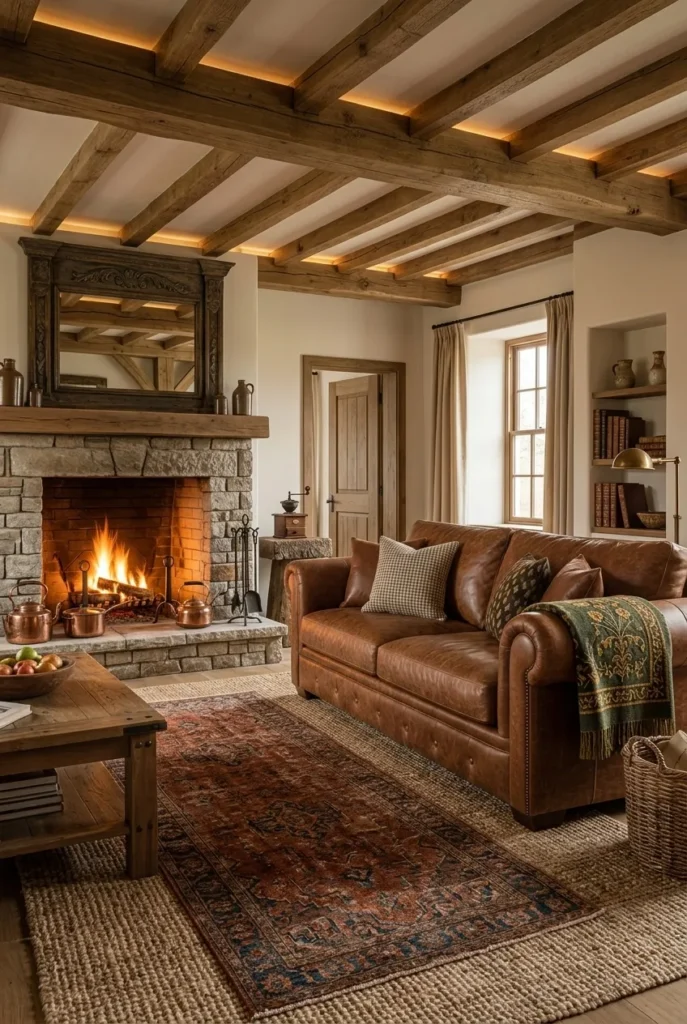
A well-worn leather sofa serves as a durable, timeless anchor piece in a rustic living room, developing a rich patina that only improves with age. Leather’s natural texture and deep tones pair effortlessly with wood, stone, and woven materials, making it one of the most versatile choices for rustic seating. Choosing a slightly distressed or vintage-style leather adds even more character to the overall design.
4. Chunky Wood Beam Ceiling
- Exposed beams add architectural character and visual height.
- Dark stained wood creates striking contrast against lighter ceilings.
- Reinforces a cabin or farmhouse-inspired design aesthetic.
- Can be original to the home or added as a decorative feature.
- Pairs well with pendant or chandelier lighting fixtures.
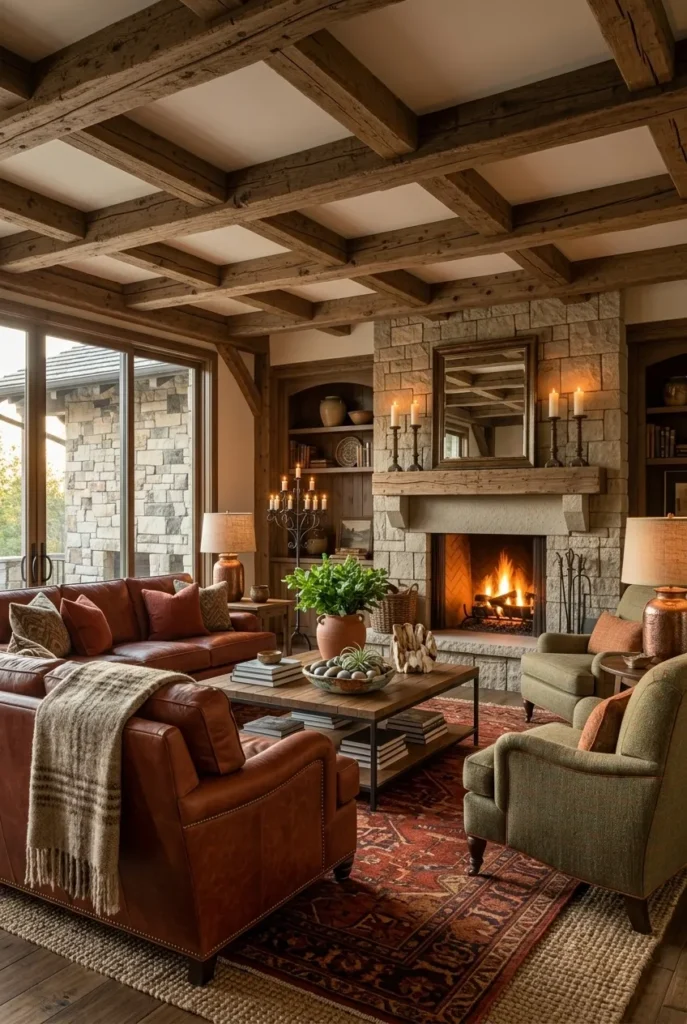
Exposed wood beams across the ceiling add architectural interest and immediately signal a rustic, cabin-inspired design. Whether original to the structure or added as a design feature, chunky beams draw the eye upward and create a sense of height and craftsmanship in the room. Staining the beams a rich, dark tone contrasts beautifully against lighter walls or ceilings for added definition.
5. Layered Textural Textiles
- Chunky knits and wool textiles add softness and warmth.
- Mixed textures create visual depth throughout the room.
- Sheepskin or faux fur throws enhance the cozy, tactile feel.
- Layering allows for easy seasonal decor updates.
- Balances the harder surfaces of stone and wood furnishings.
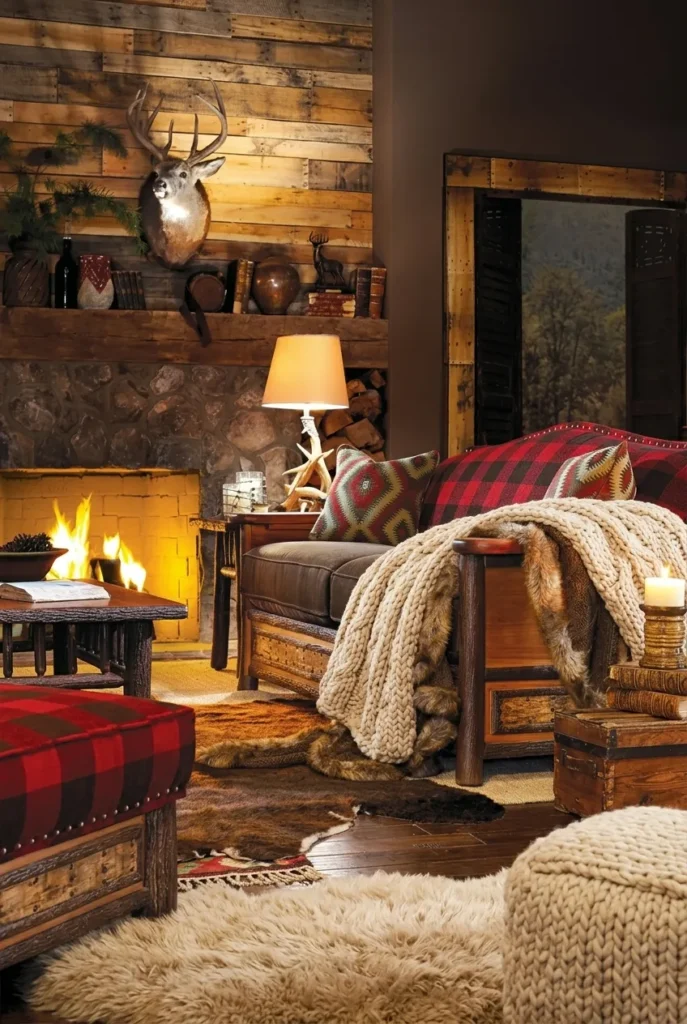
Layering textiles like chunky knit throws, sheepskin rugs, and woven pillows adds softness and warmth to balance out the harder surfaces common in rustic design, like stone and wood. Mixing different textures, from smooth linen to nubby wool, creates visual depth and makes the room feel more inviting to sit and relax in. This layering approach also allows for easy seasonal updates without a full redesign.
6. Warm, Earthy Color Palette
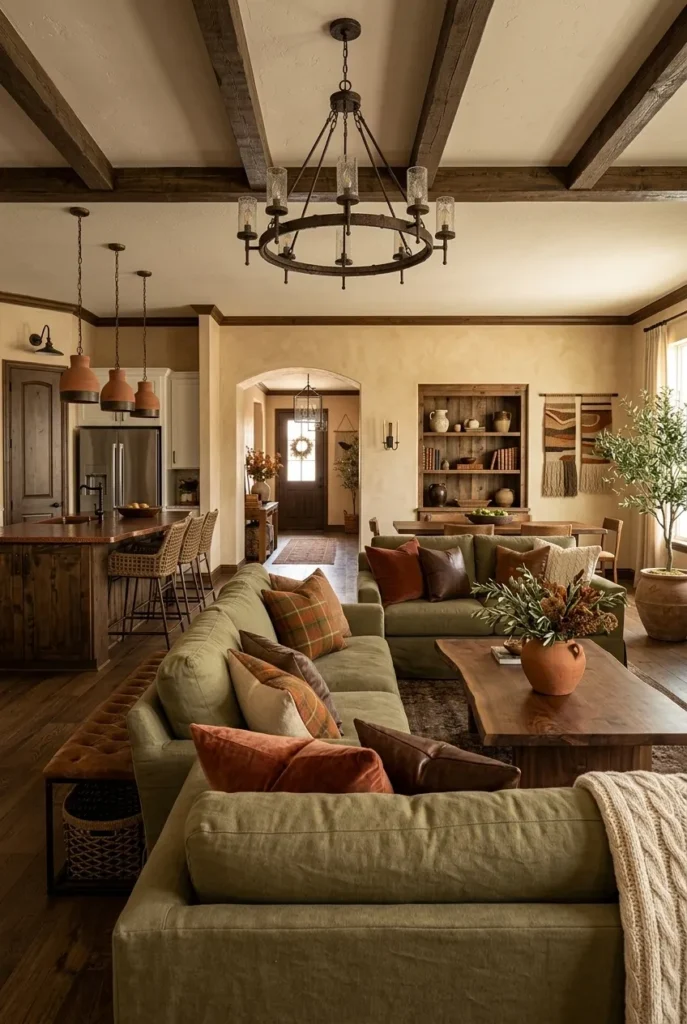
A warm, earthy color palette featuring tones like terracotta, olive green, deep browns, and warm creams reinforces the natural, grounded feeling central to rustic design. These colors work together to create a cohesive backdrop that highlights natural materials like wood and stone rather than competing with them. Avoiding overly cool or stark colors helps maintain the cozy, welcoming atmosphere rustic rooms are known for.
7. Woven Natural Elements
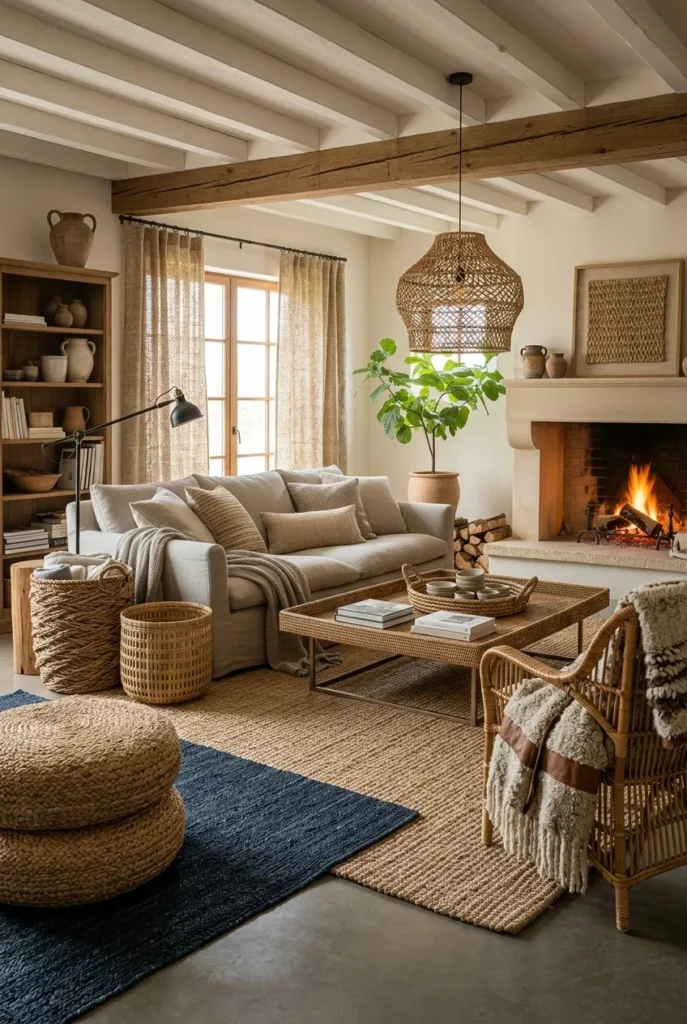
- Jute and rattan add organic texture and handcrafted charm.
- Woven baskets provide functional, stylish storage options.
- Lightens the overall look when paired with heavier furniture.
- Works well in both flooring and furniture applications.
- Reinforces the natural, earthy feel of rustic design.
Incorporating woven natural elements, such as jute rugs, rattan baskets, and wicker furniture, adds organic texture that complements the wood and stone found throughout a rustic living room. These materials bring a lightness and handcrafted quality to the space, balancing out heavier furniture pieces like leather sofas or stone fireplaces. Woven baskets also serve a practical purpose, offering stylish storage for blankets, firewood, or magazines.
8. A Statement Wooden Coffee Table
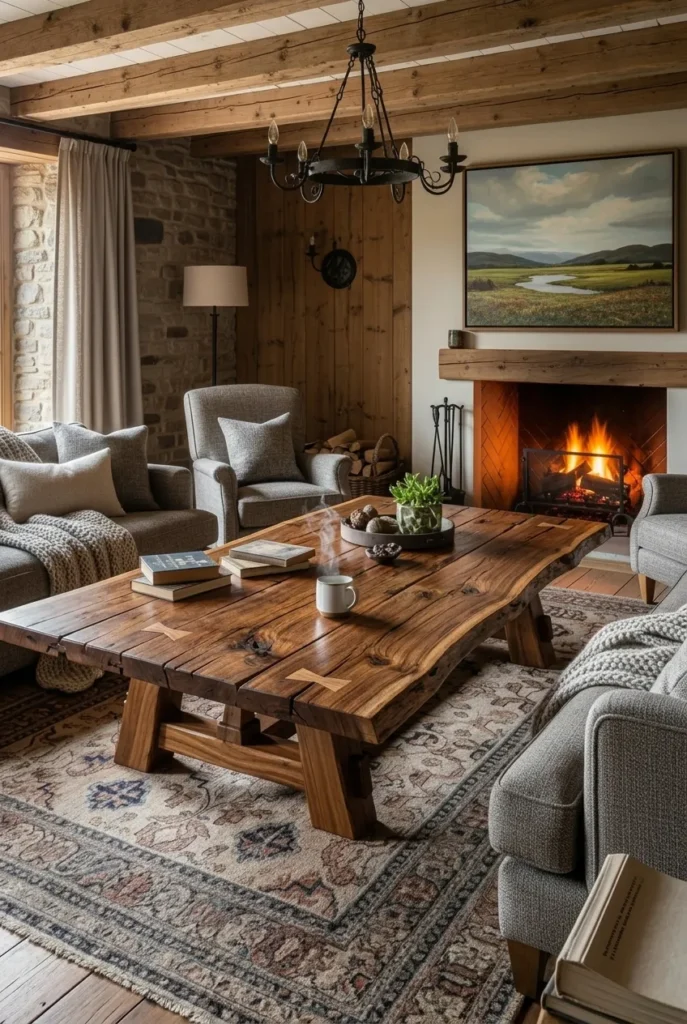
A statement wooden coffee table, especially one with a live edge or thick, solid construction, serves as a functional centerpiece that showcases the natural beauty of the wood grain. This piece often becomes a focal point in the seating area, anchoring the room while providing a practical surface for everyday living. Choosing a table with visible knots, grain patterns, or a reclaimed wood top adds even more rustic character.
9. Warm & Ambient Lighting
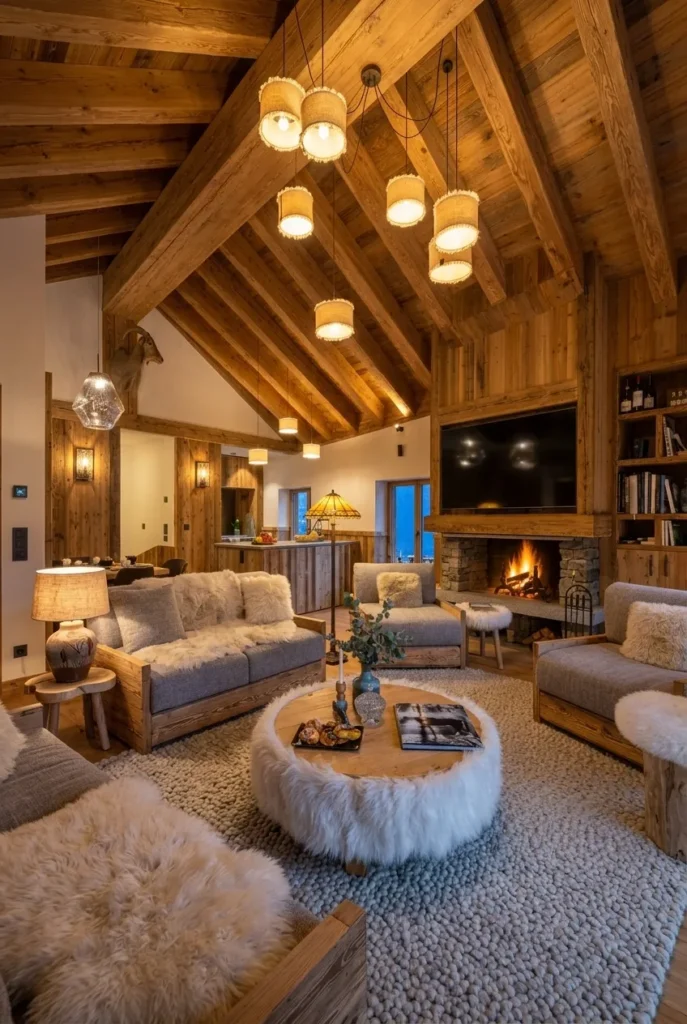
- Warm-toned bulbs create a soft, inviting glow.
- Layered lighting sources add depth and avoid harsh shadows.
- Dimmer switches allow for flexible ambiance control.
- Wall sconces and table lamps complement overhead fixtures.
- Avoiding cool, bright lighting keeps the space feeling cozy.
Warm, ambient lighting is essential to achieving a cozy rustic atmosphere, as harsh overhead lighting can quickly make a space feel cold and uninviting. Layering multiple light sources, such as table lamps, floor lamps, and wall sconces with warm-toned bulbs, creates a soft, inviting glow throughout the room. Dimmer switches also allow for adjusting the ambiance depending on the time of day or occasion.
10. Cozy Window Treatments
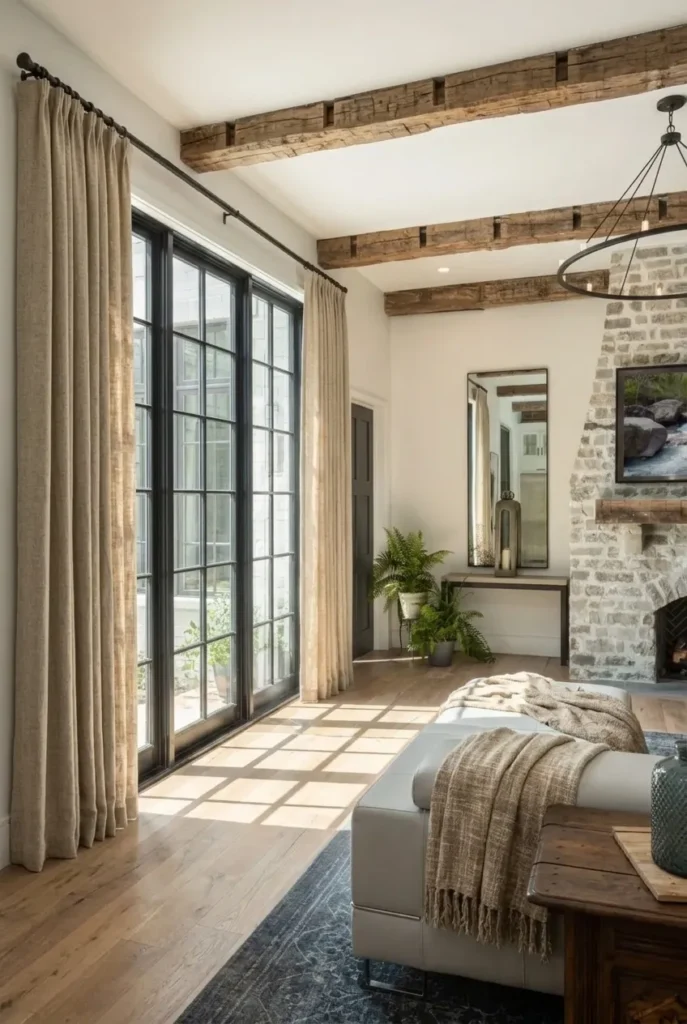
Heavy, textured curtains in natural fabrics like linen or wool add both warmth and softness to a rustic living room while also helping with insulation during colder months. These window treatments frame the room’s natural light beautifully and add another layer of texture that complements wood and stone elements. Choosing curtains in warm, neutral tones keeps the focus on the room’s natural materials rather than competing with them.
11. Display a Vintage Rug
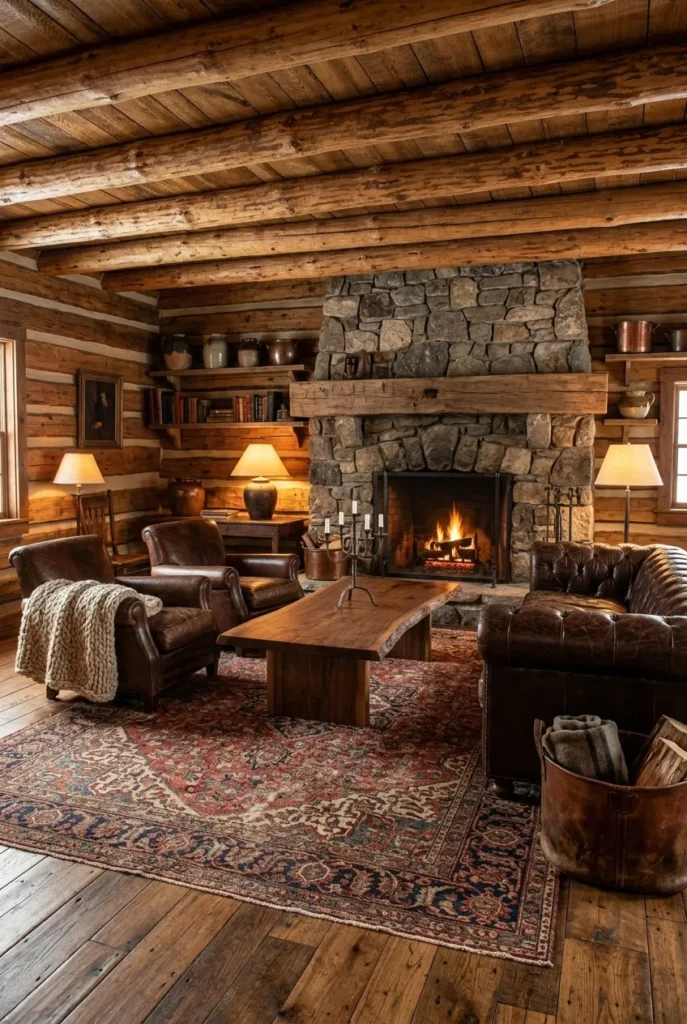
- Vintage rugs add pattern and worn-in, collected character.
- Faded color palettes complement earthy, natural tones.
- Helps define and anchor the main seating area.
- Adds softness and warmth underfoot in the living space.
- Pairs beautifully with wood flooring and leather furniture.
A vintage or antique-style area rug adds pattern, color, and history to a rustic living room, grounding the furniture while introducing a layer of worn-in charm. These rugs often feature faded colors and intricate patterns that pair beautifully with the natural materials found throughout the space. Placing the rug beneath the main seating area helps define the room and adds an extra layer of comfort underfoot.
12. Forged Iron Accents
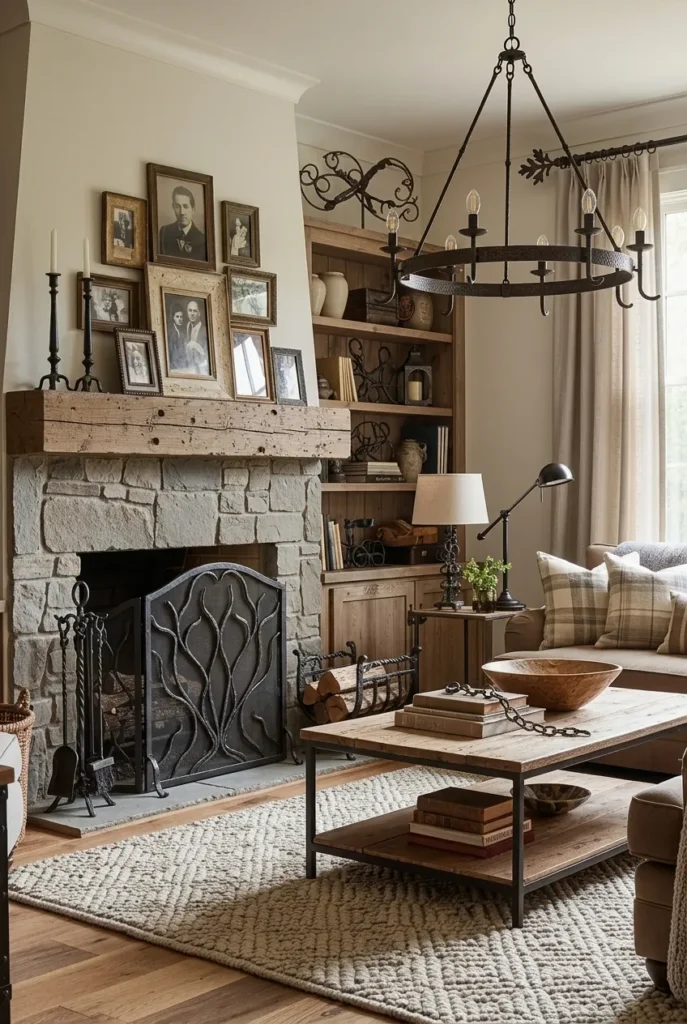
Forged iron accents, such as candle holders, light fixtures, or fireplace tools, introduce a rugged, handcrafted element that complements the natural materials in a rustic living room. The dark, matte finish of iron contrasts beautifully against lighter wood tones and adds a sense of old-world craftsmanship to the space. These accents work well in small doses, offering just enough contrast without overwhelming the room’s warmth.
13. A Dedicated Reading Nook
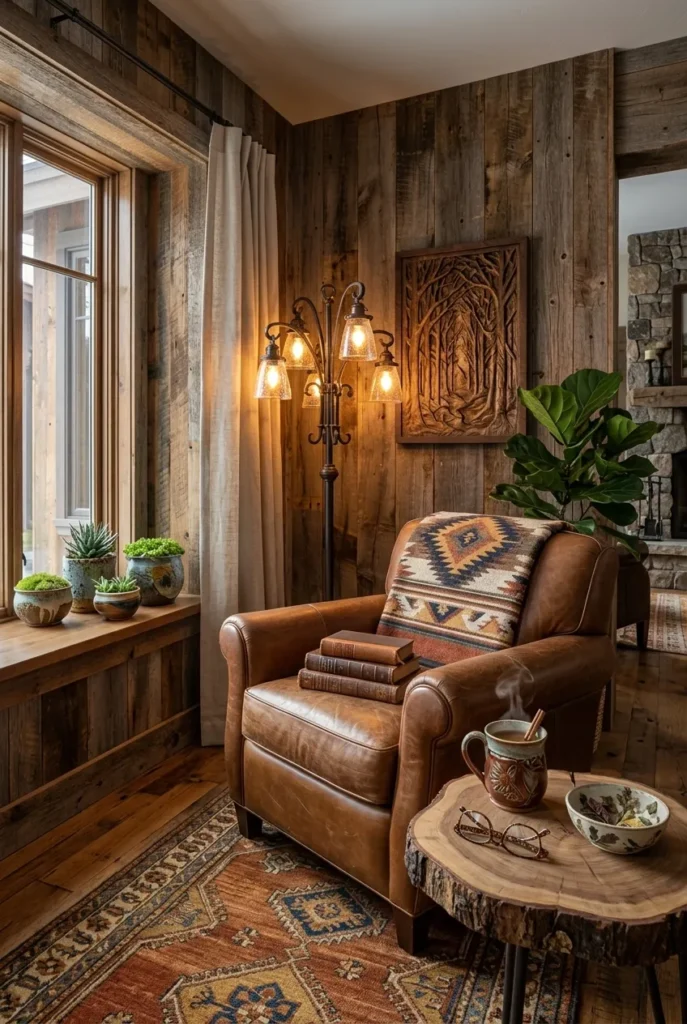
- Creates a quiet, personal retreat within the living space.
- A comfortable chair and soft throw enhance the cozy feel.
- Good task lighting supports reading during evening hours.
- Positioning near a window adds natural light and views.
- Reinforces the relaxed, welcoming nature of rustic design.
A dedicated reading nook, tucked into a corner with a comfortable chair, soft throw, and good lighting, adds a personal, cozy retreat within the larger living room. This small addition creates a quiet spot for relaxation while reinforcing the warm, welcoming feeling central to rustic design. Positioning the nook near a window allows for natural light during the day and a peaceful view while reading.
14. Open Wood Shelving
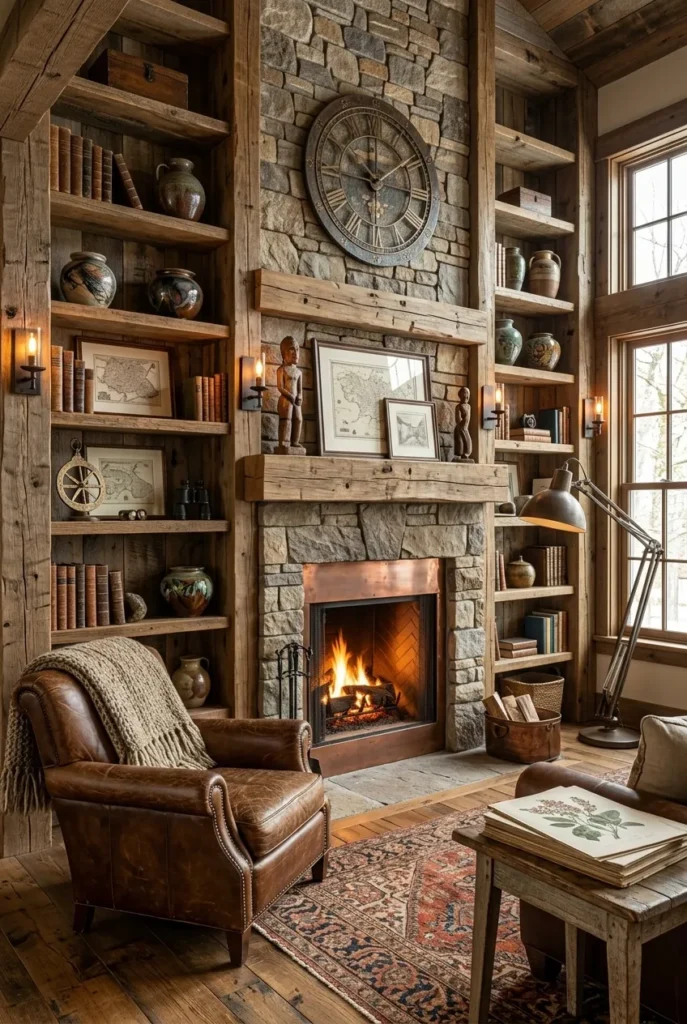
- Open shelving keeps the room feeling light and airy.
- Displays books, pottery, and personal decor pieces.
- Wood grain remains visible as part of the design.
- Encourages a curated, thoughtfully styled display.
- Offers practical storage without heavy, closed cabinetry.
Open wood shelving offers both functional storage and a way to display books, pottery, and personal treasures throughout a rustic living room. Unlike closed cabinetry, open shelves keep the room feeling airy and allow the natural wood grain to remain visible as part of the overall design. Styling the shelves with a mix of practical items and decorative accents creates a curated, lived-in look.
15. Bring the Outdoors In
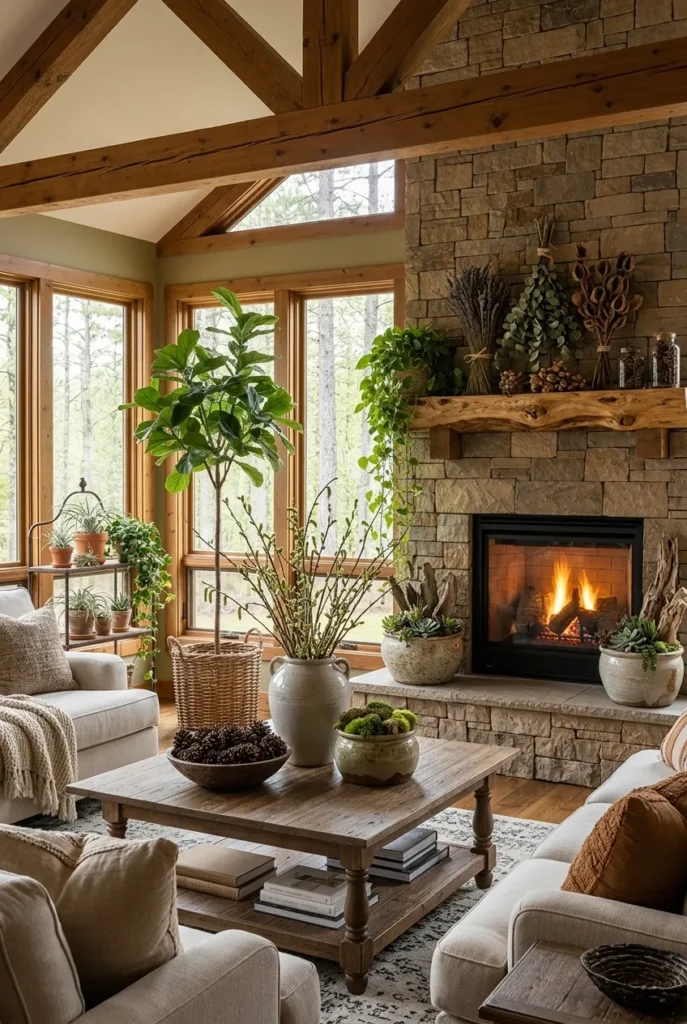
Incorporating houseplants, dried botanicals, or fresh greenery helps bring a touch of the outdoors into a rustic living room, reinforcing the connection to nature central to this design style. Potted plants in woven baskets or ceramic containers add life and softness against the room’s wood and stone surfaces. This natural greenery also helps balance out the warmer, earthy color palette with fresh pops of green.
16. Rustic Wall Art & Decor
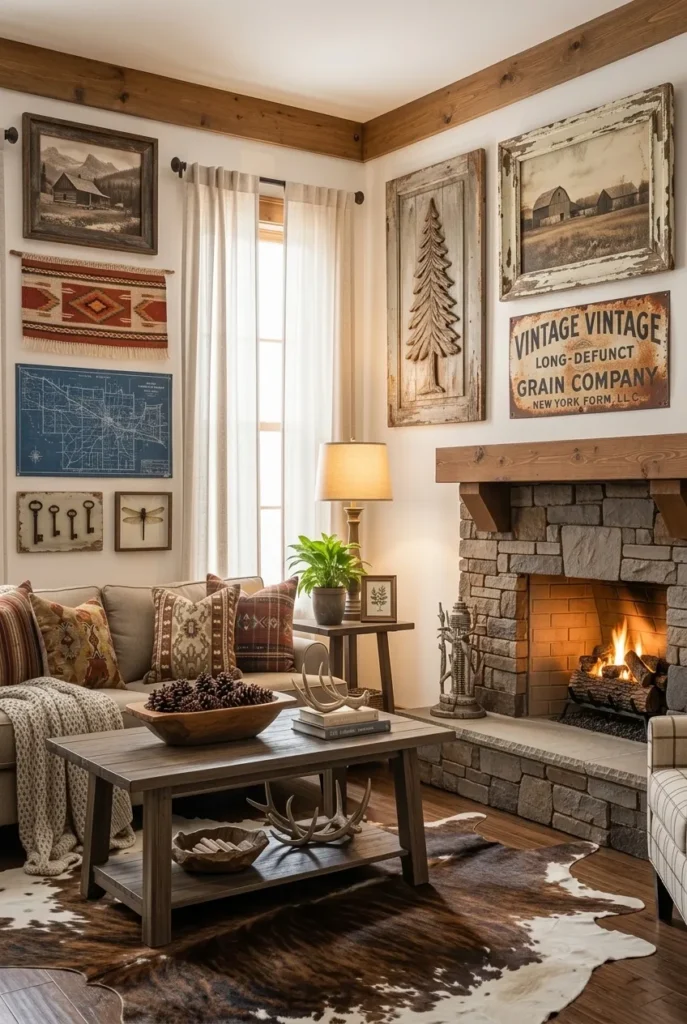
Rustic wall art, whether nature-inspired prints, vintage-style signage, or handmade pieces, adds personality and warmth to the walls of a living room. Choosing artwork with earthy tones, natural subject matter, or aged frames helps reinforce the overall rustic theme without feeling overly matched or staged. Mixing a few different styles and sizes of art creates a more collected, authentic look throughout the space.
17. Warm Wood Flooring
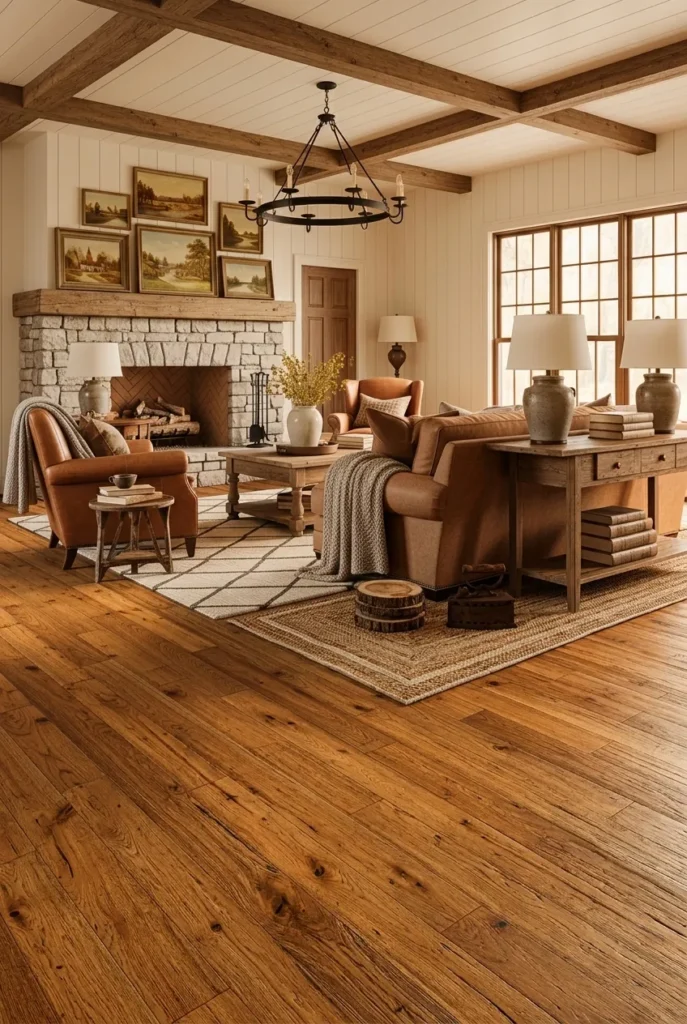
- Wide-plank wood flooring adds warmth and rustic authenticity.
- Visible grain and color variation enhance natural character.
- Serves as a foundation that ties the whole room together.
- Pairs beautifully with layered vintage or woven rugs.
- Works well with both engineered and solid hardwood options.
Warm wood flooring, whether wide-plank hardwood or a rustic engineered wood, forms the foundation of a cozy rustic living room and ties together all the natural materials used throughout the space. Choosing a wood tone with visible grain and slight variation in color adds authenticity and depth underfoot. Pairing the flooring with layered rugs adds even more warmth and comfort to the room.
18. The Scent of Rustic Comfort
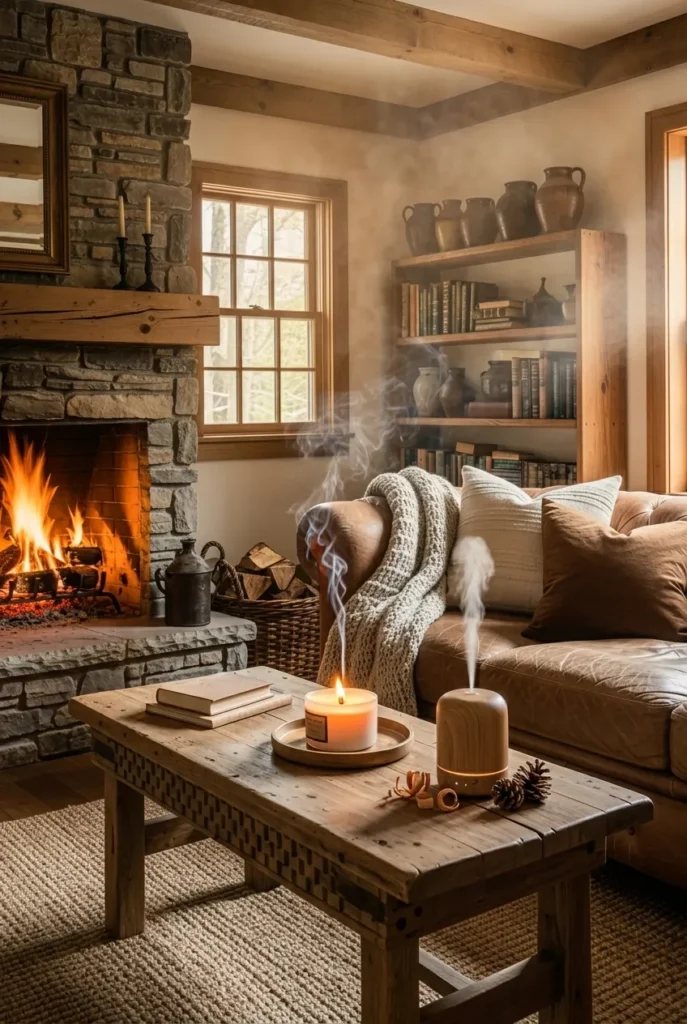
- Cedarwood and pine scents reinforce a cozy, cabin-like feel.
- Candles and diffusers add a final layer of sensory warmth.
- Smoky or woodsy fragrances complement the room’s materials.
- A crackling fireplace naturally enhances the room’s ambiance.
- Scent ties together the overall rustic sensory experience.
The right scent can complete the sensory experience of a rustic living room, with fragrances like cedarwood, pine, sandalwood, or smoky vanilla reinforcing the cozy, cabin-like atmosphere. Candles, diffusers, or a crackling fireplace all contribute to this layered sensory warmth, making the room feel even more inviting. Choosing natural, wood-based scents helps tie the room’s atmosphere together in a subtle but meaningful way.
Conclusion
Creating a warm, rustic living room is about layering natural materials, textures, and lighting to build a space that feels like a genuine retreat from the outside world. From a statement stone fireplace to the subtle warmth of a cedarwood candle, each of these 18 ideas contributes to a cohesive, inviting atmosphere that can be adapted to fit any home, whether a mountain cabin or a suburban house seeking a cozy escape. By focusing on natural materials, warm tones, and thoughtful details, you can build a living room that feels comforting and welcoming for years to come.
Frequently Asked Questions (FAQs)
How do I keep a rustic living room from feeling too dark?
To prevent a rustic living room from feeling too dark, balance heavier elements like dark wood beams or stone with lighter wall colors, such as warm whites or soft creams. Maximizing natural light through sheer curtains or minimal window treatments also helps keep the space feeling bright. Adding warm, layered lighting throughout the room further prevents any single dark material from making the space feel closed in.
Can I mix rustic with modern styles?
Yes, mixing rustic and modern styles, often referred to as modern rustic or transitional design, is a popular way to create a space that feels both warm and current. This can be achieved by pairing natural materials like wood and stone with cleaner lines, minimal decor, and a more neutral color palette. Combining a rustic wood coffee table with a streamlined modern sofa is a simple example of how these two styles can work together seamlessly.
What’s the most important element for achieving a cozy, rustic feel?
While many elements contribute to a rustic feel, warm lighting is often considered one of the most important factors, as it directly affects how inviting and comfortable a room feels regardless of the materials used. Layered textiles and natural materials like wood and stone are also essential, but even the most beautifully designed rustic room can feel cold under harsh or overly bright lighting. Prioritizing warm-toned, layered lighting helps tie all the other rustic elements together successfully.