Turn Your Laundry Room into a Space That Truly Works for your Household
The laundry room is often one of the most overlooked spaces in the home, yet it plays a crucial role in daily life and household organization. With the right layout, storage solutions, and design choices, this functional space can become efficient, enjoyable, and even beautiful to spend time in. Whether you’re working with a small closet-sized laundry area or a spacious dedicated room, this guide covers everything from maximizing tight spaces to avoiding common design mistakes, helping you turn your laundry room into a space that truly works for your household.
Maximizing Small Laundry Room Spaces
Small laundry rooms present a unique design challenge, requiring every inch of space to serve a clear purpose without feeling cramped or cluttered. By focusing on vertical storage, multi-functional furniture, and smart appliance choices, even the tightest laundry closets can become surprisingly efficient. The following strategies help make the most of limited square footage while keeping the space organized and easy to use.
Stackable Units are Your Best Friend
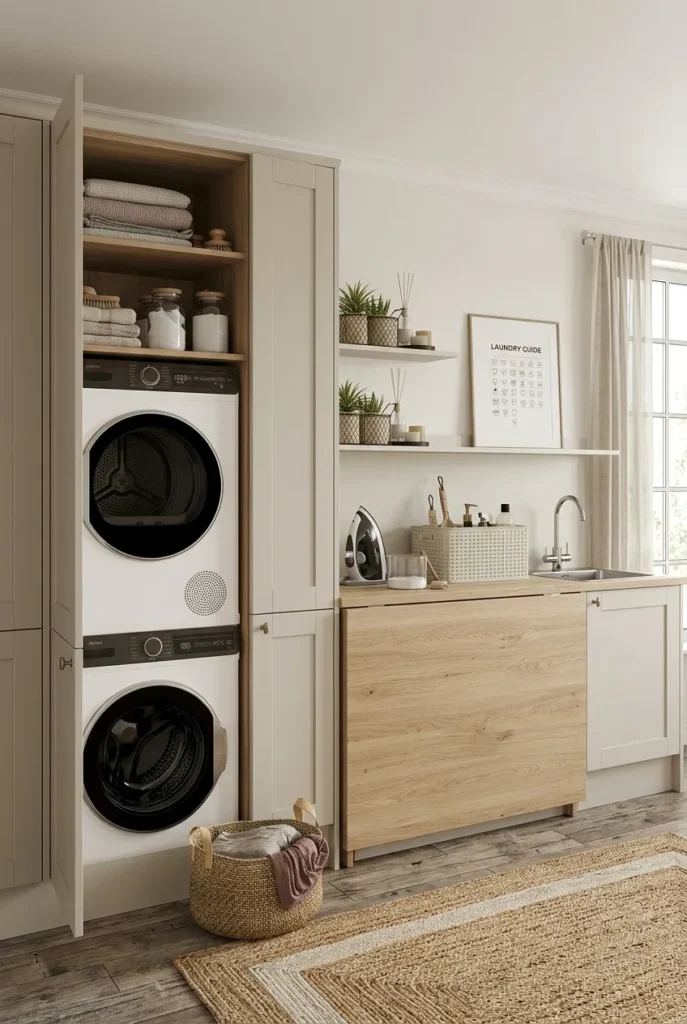
Stacking the washer and dryer vertically rather than placing them side by side is one of the most effective ways to reclaim valuable floor space in a small laundry room. This configuration frees up an entire section of the room for additional storage, a folding counter, or even a small sink, depending on the available square footage. Many modern stackable units also come with matching finishes, creating a streamlined, built-in appearance even in compact spaces.
Create a Folding Station
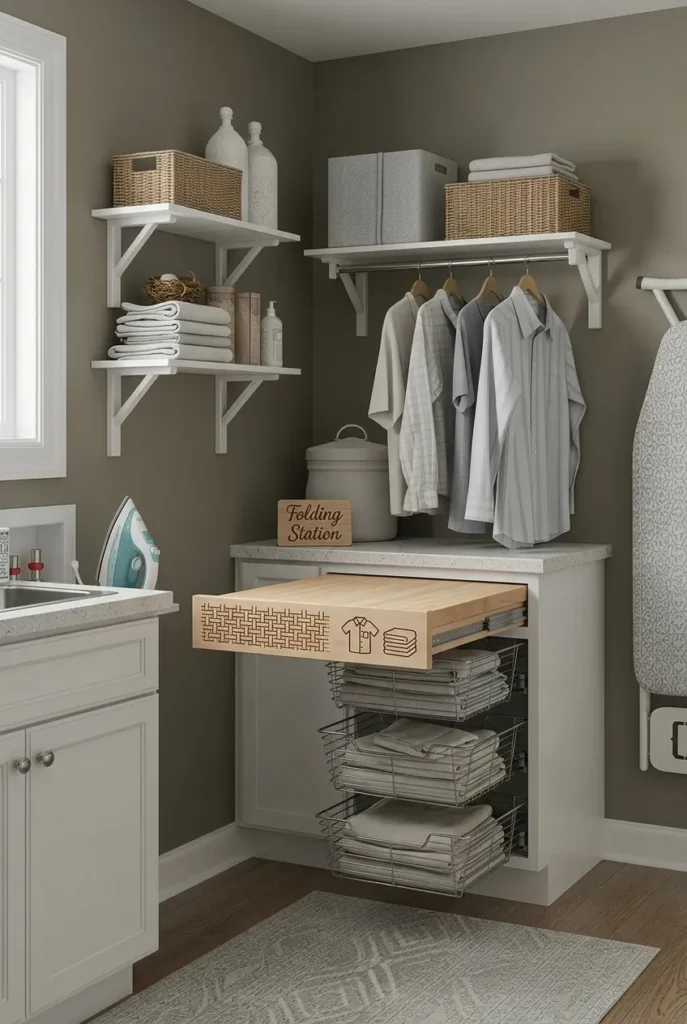
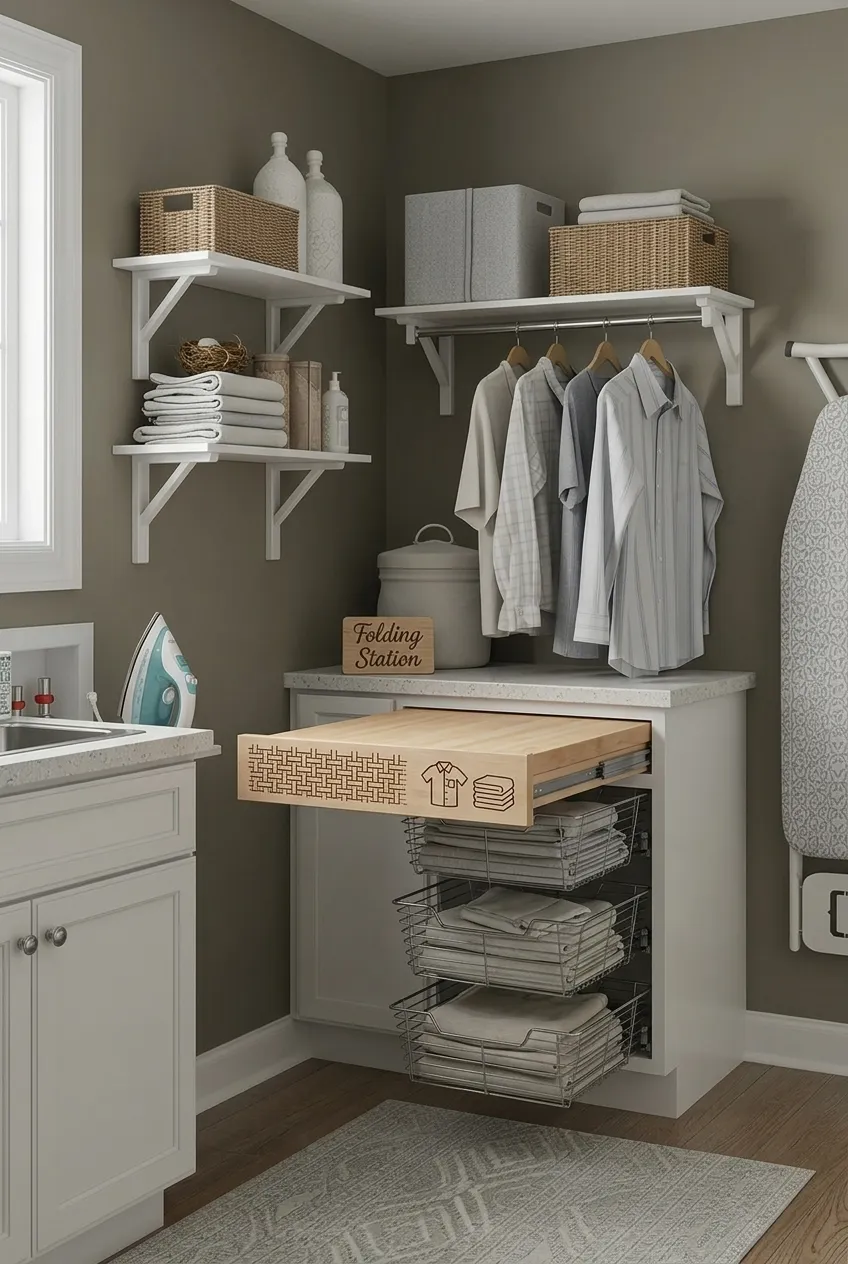
Even in a small laundry room, carving out a dedicated folding surface, whether a small countertop, a pull-out shelf, or a fold-down table, makes the entire laundry process more efficient. This designated space prevents clean clothes from piling up on top of the washer or dryer, keeping the room looking tidier overall. In tighter spaces, a fold-down or slide-out folding surface can be tucked away when not in use.
Smart Storage Solutions
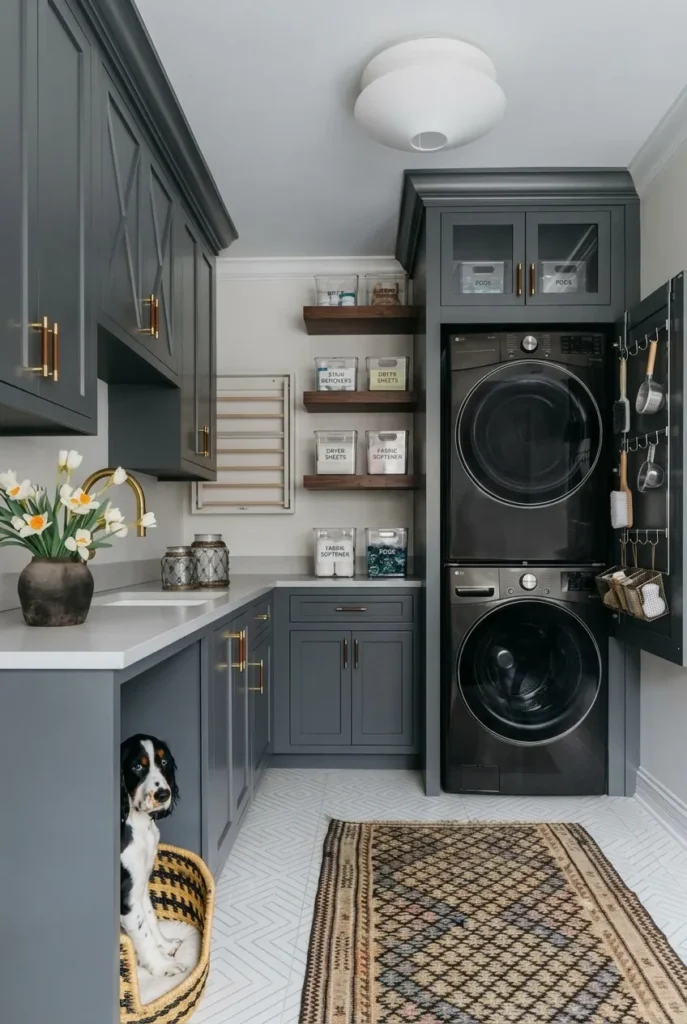
Vertical storage, such as wall-mounted shelving, hanging rods, and over-the-door organizers, allows a small laundry room to store detergents, hampers, and supplies without consuming precious floor space. Clear bins and labeled containers also help keep smaller items, like stain removers or dryer sheets, organized and easy to locate. Utilizing the space above the washer and dryer is often one of the most underused storage opportunities in a small laundry room.
Essential Laundry Room Features for Better Functionality
Beyond appliances, several key features can significantly improve how well a laundry room functions on a daily basis. From sink placement to sorting systems and lighting, these elements often make the biggest difference in how efficient and pleasant the space feels to use.
The Right Sink Makes All the Difference
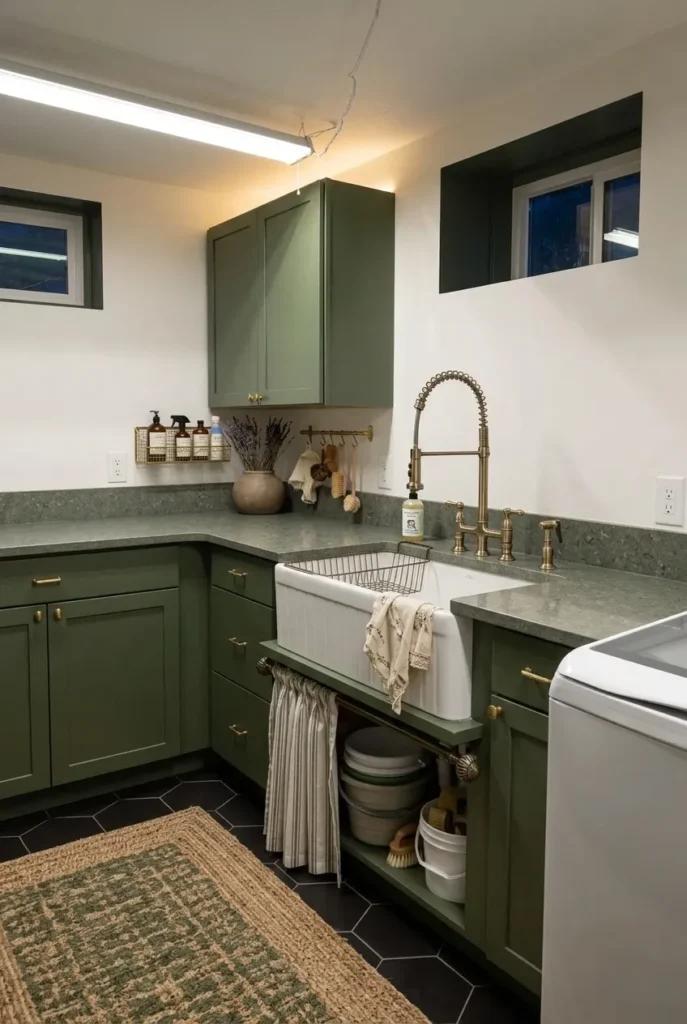
A utility sink in the laundry room provides a dedicated space for hand-washing delicate items, pre-treating stains, or even bathing pets, making it one of the most valuable additions to a functional laundry space. Deep basin sinks are particularly useful for soaking larger items or filling buckets for cleaning tasks around the home. Choosing a sink with a pull-down or gooseneck faucet also adds extra convenience for filling and rinsing.
Thoughtful Sorting Systems
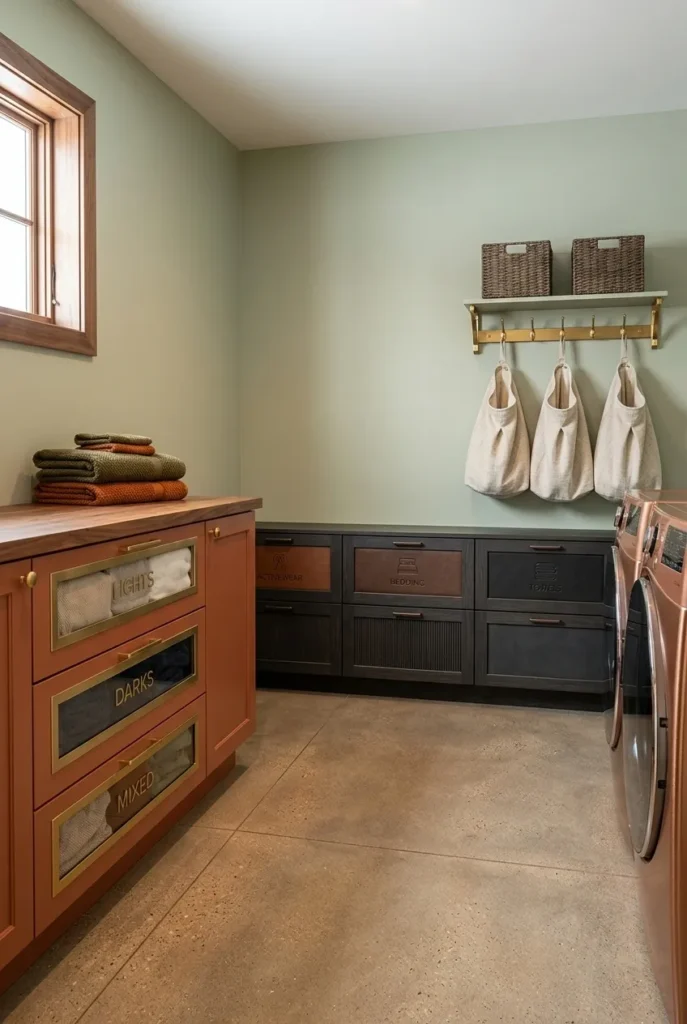
A well-planned sorting system, whether built-in bins, labeled hampers, or a multi-compartment cart, streamlines the laundry process from the moment dirty clothes enter the room. Sorting by color, fabric type, or household member helps reduce the time spent organizing laundry before washing even begins. Built-in sorting stations also help keep dirty laundry contained and out of sight until it’s ready to be washed.
Proper Drying Solutions
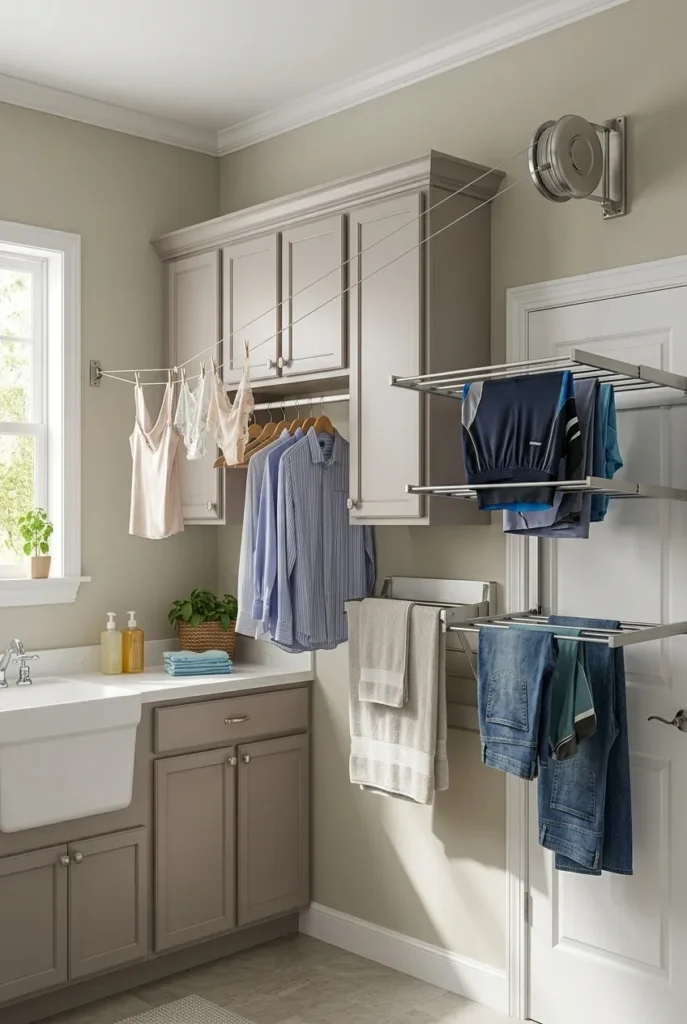
Beyond the dryer itself, additional drying solutions like retractable clotheslines, wall-mounted drying racks, or hanging bars for delicate items add flexibility for garments that shouldn’t go through a standard dryer cycle. These features are especially valuable for households that regularly wash delicate fabrics, activewear, or air-dry-only items. Positioning drying racks near a window or vent can also help speed up the air-drying process.
Adequate Lighting
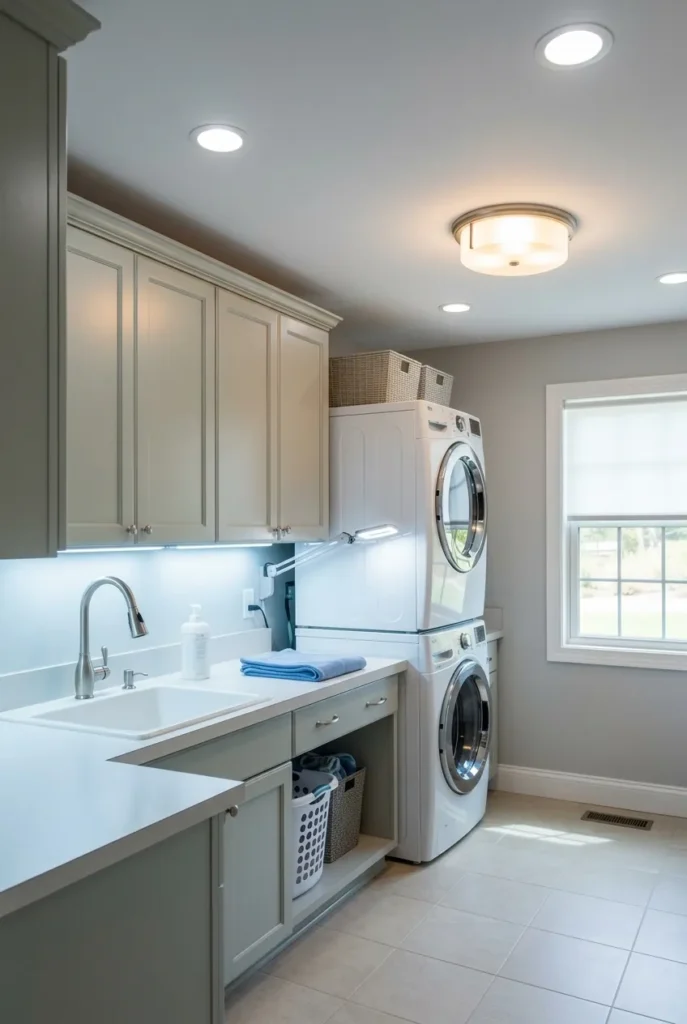
Bright, even lighting is essential in a laundry room, both for accurately checking fabric colors and for spotting stains that might otherwise go unnoticed under dim lighting. A combination of overhead lighting and task lighting near the folding or sorting areas ensures the entire room is well-lit for various laundry tasks. Natural light, when available, also helps make the space feel more pleasant to spend time in.
Laundry Room Organization Tips That Actually Work
Effective laundry room organization goes beyond simply adding storage, it requires a system that fits naturally into the household’s daily routine. Grouping supplies by task, such as keeping stain removers near the sorting area and detergents near the washer, minimizes unnecessary movement around the room. Regularly decluttering expired products, mismatched socks, and unused supplies also keeps the space from becoming overwhelmed over time.
Choose Durable, Water-Resistant Flooring
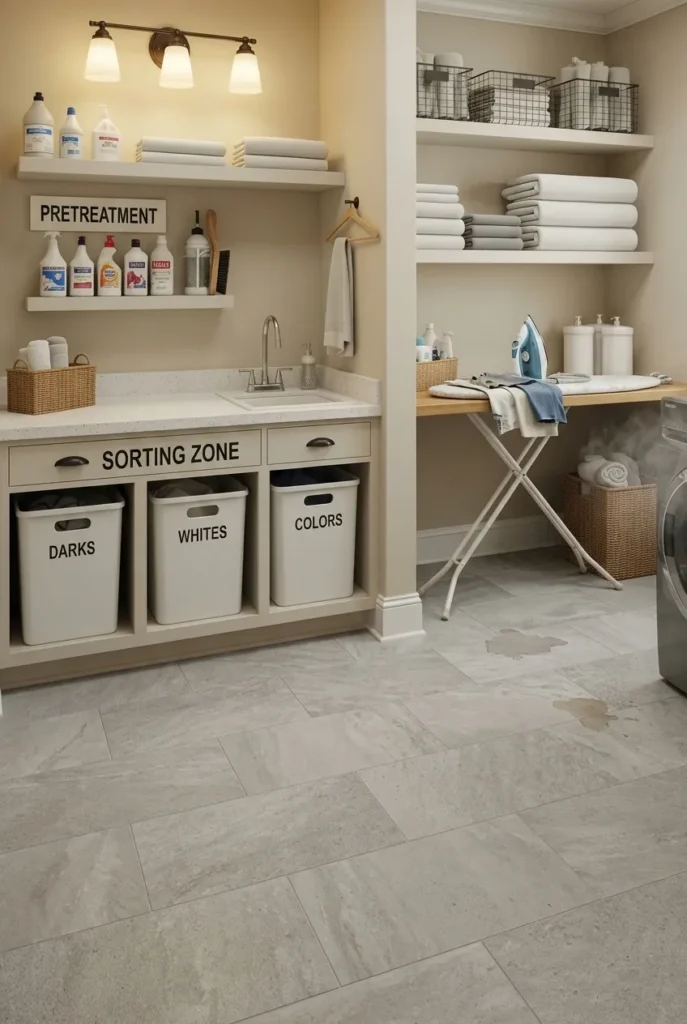
Laundry rooms are prone to water exposure from appliance leaks, spills, or condensation, making durable, water-resistant flooring a practical necessity rather than just a design choice. Materials like porcelain tile, luxury vinyl plank, or sealed concrete hold up well to moisture while still offering a range of stylish finishes. Choosing flooring with some texture also helps prevent slipping in a room where water exposure is more likely.
Add Personality with Wall Treatments
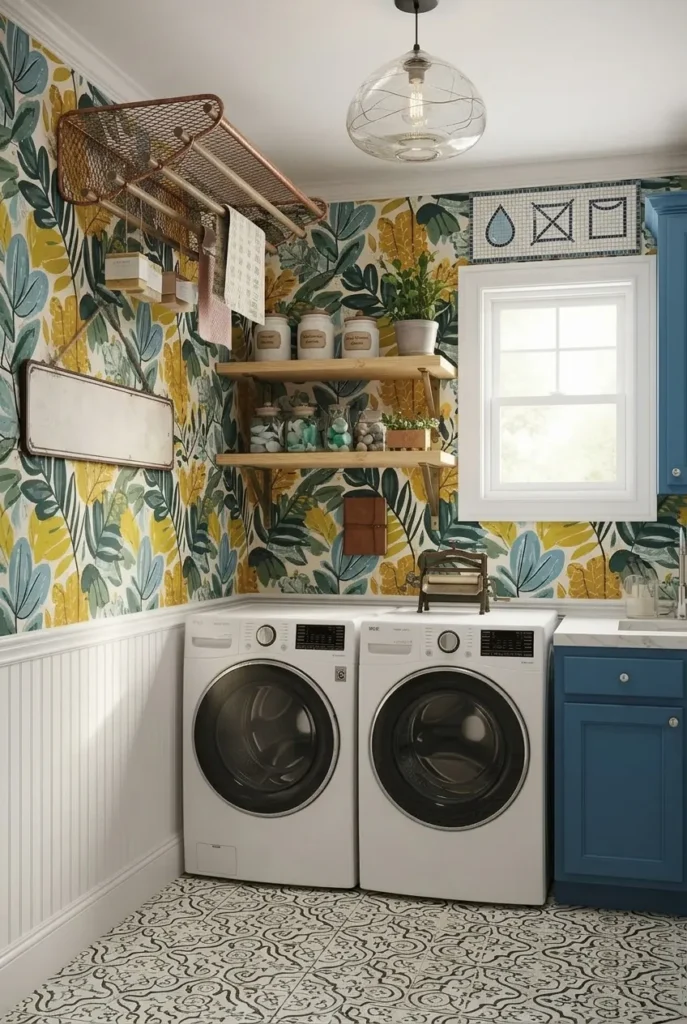
Wallpaper, bold paint colors, or decorative tile backsplashes offer an opportunity to inject personality into a laundry room without worrying about matching the rest of the home’s decor as closely. Since this is often a smaller, more private space, it can be a great place to experiment with a bolder pattern or color than you might choose elsewhere. Durable, washable wall finishes are recommended given the room’s exposure to moisture and occasional splashes.
Incorporate Practical Yet Stylish Countertops
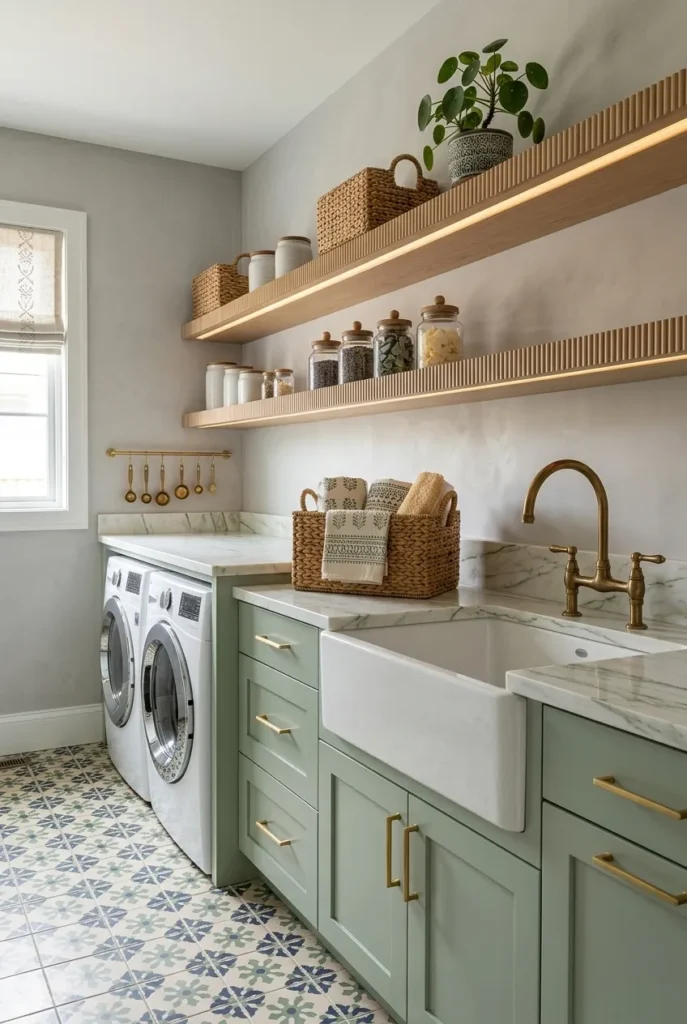
Countertops in a laundry room need to withstand frequent use, moisture, and the occasional detergent spill, making durable materials like quartz, laminate, or butcher block popular choices. Beyond folding laundry, these surfaces are often used for sorting, pre-treating stains, or even light crafting projects, so durability should be balanced with style. Choosing a countertop that complements the flooring and cabinetry creates a more polished, cohesive look throughout the room.
Don’t Forget the Details
Small design details, such as cabinet hardware, light fixtures, and decorative accents, help elevate a laundry room from purely functional to genuinely well-designed. These finishing touches often require minimal investment but make a noticeable difference in how polished and intentional the space feels. Adding a small piece of art, a patterned rug, or a scented candle also helps make the room feel more inviting to spend time in.
Multi-Functional Laundry Room Ideas
For many households, the laundry room serves purposes well beyond washing and drying clothes, often taking on additional roles depending on available space and family needs. Designing the room with these secondary functions in mind helps maximize its overall usefulness within the home.
Combined Mudroom-Laundry Room
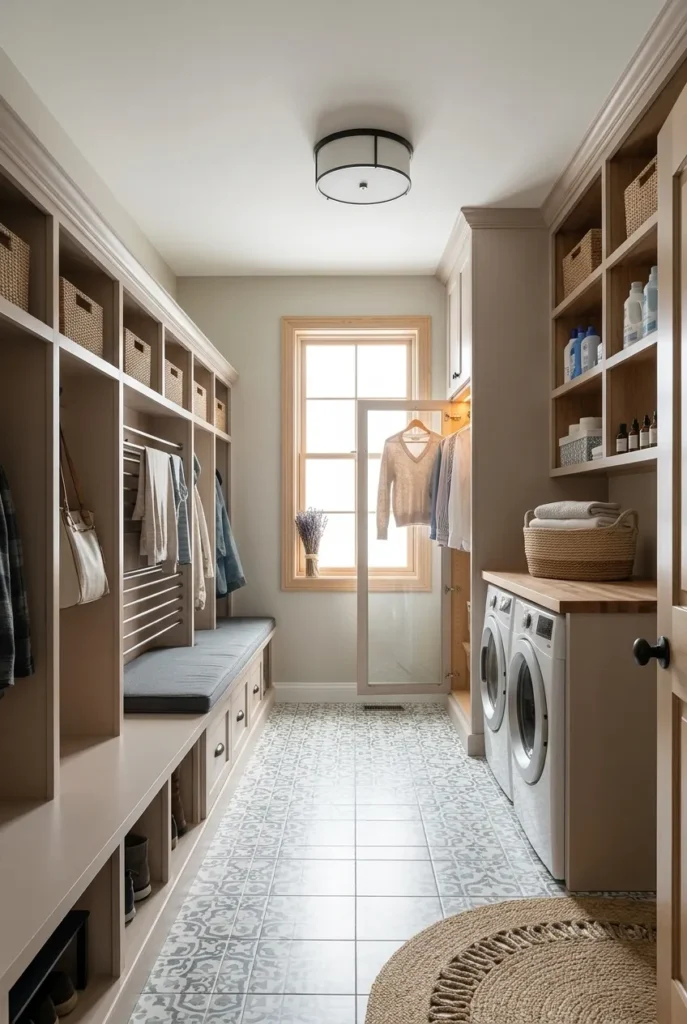
Combining a mudroom with the laundry room creates a highly functional entry space where dirty shoes, coats, and bags can be managed right alongside the laundry process. Built-in cubbies, hooks, and a bench for changing shoes help keep outdoor clutter contained near the entryway rather than spreading throughout the home. This combination works particularly well for households with children, pets, or active outdoor lifestyles.
Pet Care Center
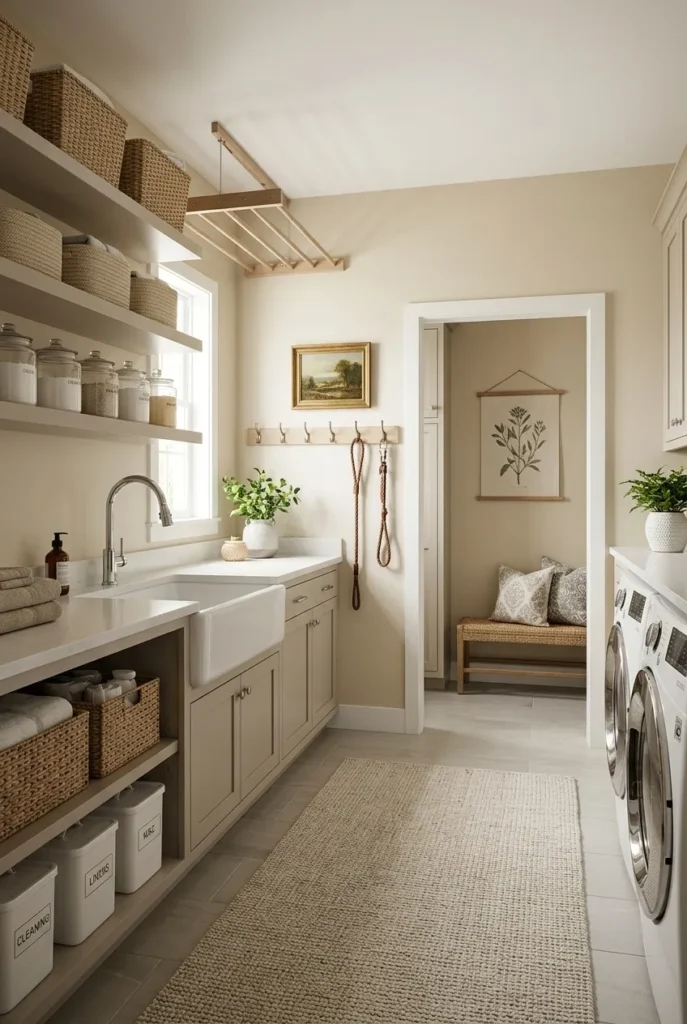
Incorporating a pet care center into the laundry room, complete with a built-in feeding station, storage for supplies, and easy access to the utility sink for baths, keeps pet-related mess contained to one practical area of the home. This setup is especially convenient in households with dogs, where muddy paws and occasional baths are a regular occurrence. Durable, easy-to-clean flooring and surfaces further support this dual-purpose function.
Crafting or Gift Wrapping Station
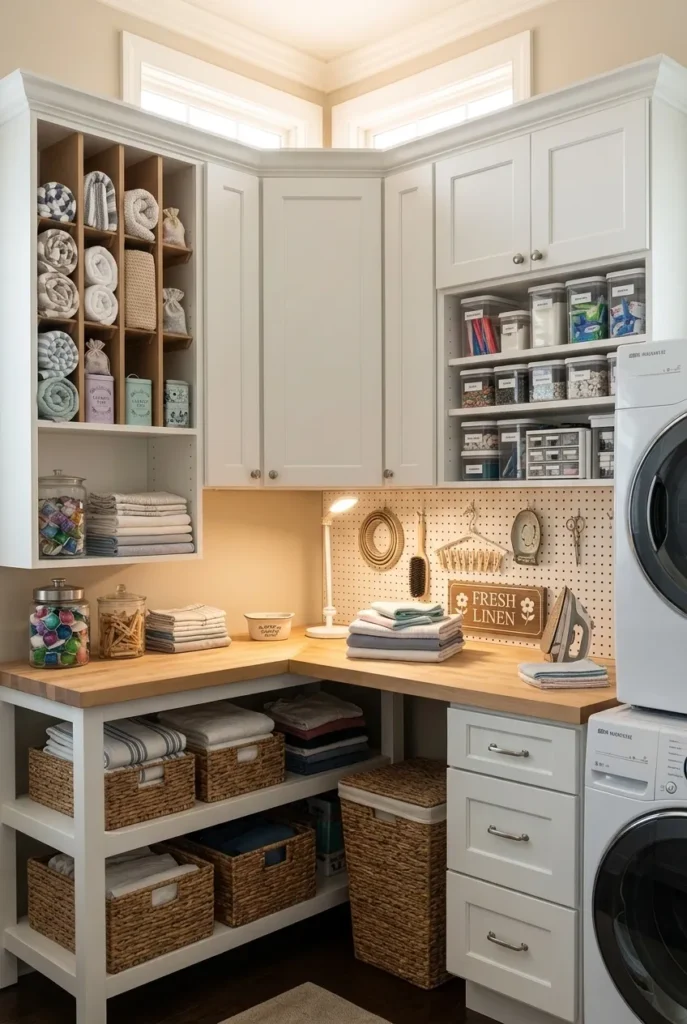
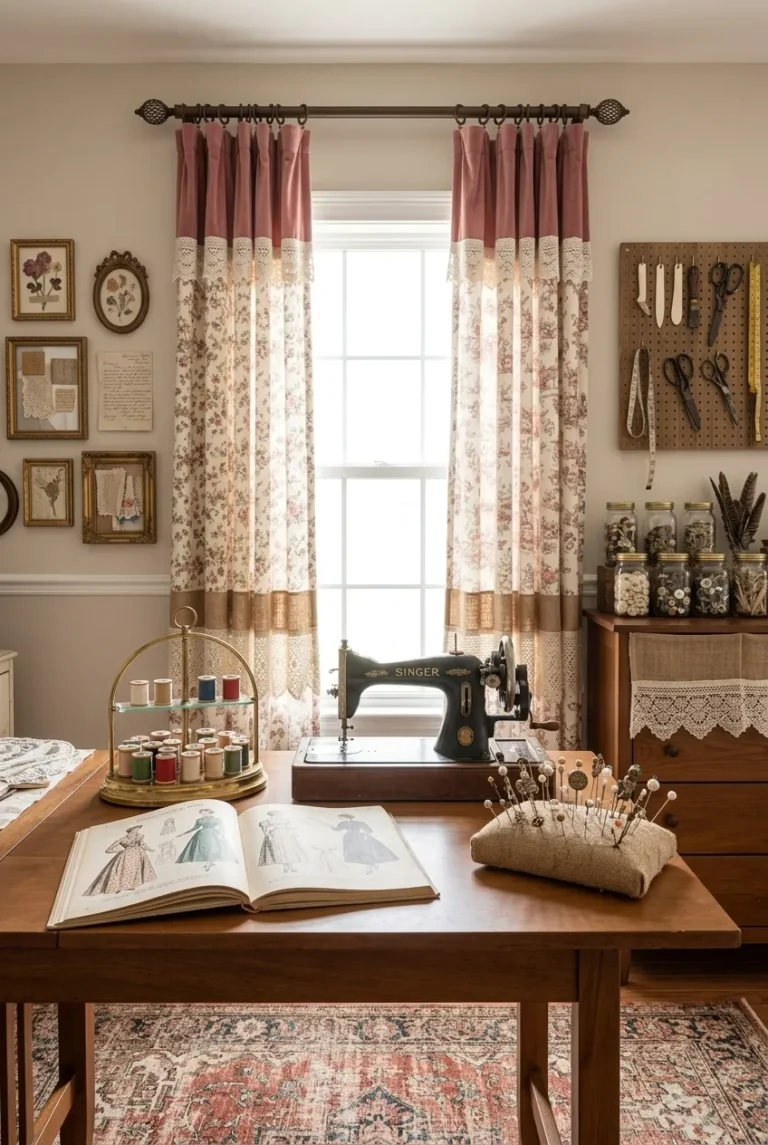
For households that enjoy crafting, sewing, or gift wrapping, the laundry room’s countertop and storage can easily double as a dedicated station for these activities. Adding a roll of wrapping paper storage, ribbon organizers, or a small sewing kit nearby allows these supplies to stay contained without taking over other areas of the home. This multi-functional use makes the most of the room’s counter space, which often sits empty between laundry loads.
- Laundry room counters double as a crafting or wrapping surface.
- Ribbon and paper storage keeps gift-wrapping supplies organized.
- Sewing supplies can be stored conveniently nearby for quick repairs.
- Makes efficient use of counter space between laundry loads.
- Keeps crafting supplies contained to one dedicated area.
Common Laundry Room Mistakes to Avoid
Even well-intentioned laundry room designs can fall short if certain common mistakes aren’t addressed during the planning process. Overlooking proper ventilation, choosing non-durable materials, or failing to plan for adequate storage are among the most frequent issues that reduce a laundry room’s overall functionality. Being aware of these pitfalls in advance helps ensure the finished space performs as well as it looks.
- Skipping proper ventilation can lead to moisture and odor issues.
- Choosing non-durable materials leads to premature wear and damage.
- Underestimating storage needs results in ongoing clutter.
- Poor lighting placement makes stain-checking and sorting difficult.
- Ignoring workflow and appliance placement creates an inefficient layout.
Laundry Room FAQ
What is the ideal size for a functional laundry room?
While there is no single ideal size, a functional laundry room typically needs at least enough space to comfortably access the washer and dryer doors, with additional room for a folding surface if possible. Smaller closets can still function well with stacked appliances and vertical storage, while dedicated rooms of fifty square feet or more allow for additional features like a sink or crafting station. The right size ultimately depends on the household’s specific needs and available space within the home.
How can I reduce noise from my laundry room appliances?
Reducing noise from laundry appliances often starts with ensuring the washer and dryer are level and properly installed, as an uneven appliance can vibrate and create excess noise during operation. Adding a sound-dampening mat beneath the appliances or ensuring the laundry room door fits snugly can also help contain noise within the space. For rooms located near living or sleeping areas, additional insulation within the walls may further reduce sound transfer.
What ventilation is necessary for a laundry room without windows?
A laundry room without windows should include a properly vented exhaust fan to help manage moisture and prevent issues like mold or mildew from developing over time. The dryer itself should also be vented directly to the exterior of the home, rather than into an interior space, to safely remove heat and lint. Ensuring the room has adequate air circulation helps protect both the appliances and the overall air quality of the space.
Conclusion
A well-designed laundry room goes far beyond simply housing a washer and dryer, it has the potential to become an organized, efficient, and even multi-functional space that supports the daily rhythms of the household. From maximizing small footprints with stackable appliances to incorporating thoughtful storage, durable materials, and smart design details, every choice contributes to a room that works harder for the people who use it. By avoiding common mistakes and focusing on both function and style, any laundry room can be transformed from a purely utilitarian chore space into a genuinely functional haven within the home.